

The platform for the 2026-2027 program of the Tourism Ministry will open in early August, targeting a larger number of potential beneficiaries while allowing the associated digital card to be used for a longer period (until Dec. 31, 2027) compared with previous programs, Tourism Minister Olga Kefalogianni said in an interview with Naftemporiki’s vidcast and journalist Michalis Psilos.
“We want to boost domestic tourism, giving our fellow citizens the opportunity to take holidays in Greece and discover our country. We want to support Greek families, especially those who need it most, such as large families and people with disabilities. We have expanded the income criteria and strengthened the program’s social dimension,” the tourism minister said.
For the first time, people with a disability rate of 67% or higher, as well as families with children who have a disability rate of 67% or higher, will be eligible to participate in the lottery without income criteria.
Income thresholds will increase from 19,000 euros to 21,000 euros for single applicants without children, and from 31,000 euros to 33,000 euros for married couples without children. For large families, the maximum income limits will be extended according to the number of children, while from the fourth child onwards the subsidy will increase by 50 euros for each additional child. Subsidies will range from 200 euros to 600 euros, depending on the travel period and beneficiary category.
“For the Ministry of Tourism, the 2026-2027 program is also a development tool supporting our strategy for year-round tourism and local communities, boosting every corner of the country, particularly mountainous and less-promoted areas, where we are also focusing the program’s promotion. As part of the ministry’s targeted policy to strengthen mountain tourism, 70% of the program’s available budget will be allocated to the period from October to April.”


The data available so far point to very strong momentum, showing that Greece continues to rank among the world’s leading tourism destinations. It should also be noted that, since 2023, the country has recorded three consecutive record-breaking years.
Looking at the results for 2025, the best year ever for Greek tourism, revenues increased by 10%, significantly outpacing the growth in visitor arrivals. This indicates that the quality of tourism is also improving, while travel activity recorded the strongest increases during the first five months and the final quarter of the year.
In 2026, this upward trend has strengthened even further in terms of revenues, with receipts rising by 25.8% in January-May compared with the same period last year.
“We are therefore beginning to achieve our key objective of extending tourism beyond the peak season, while our strategy also aims to spread tourism geographically across the entire country.
We want to create development opportunities for other regions beyond the country’s most popular and established tourist destinations, highlighting the comparative advantages and unique characteristics of each destination.
In terms of infrastructure improvements, the government of Kyriakos Mitsotakis has already delivered significant progress, both in road networks and airports, as well as other entry gateways. We are also making a major effort to expand and upgrade the network of tourist ports, and this work must continue.
At the same time, projects are being implemented to improve water resource availability and address water scarcity, including desalination projects on islands.
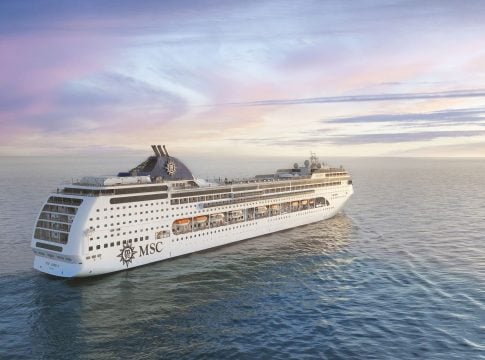
As she said, overtourism is a somewhat abstract concept. However, based on the definition provided by the UN World Tourism Organization, Greece does not face an overtourism problem. There are indeed pressures in certain destinations during specific periods of the year. Where we identify significant pressures, we take action. For example, this applies to cases where several thousand cruise passengers disembark at certain destinations at the same time.”
She also referred to the cruise passenger disembarkation fee, which is collected from each passenger leaving a cruise ship.
“It is revenue that is returned to local communities. One-third is allocated to local authorities, one-third to the Ministry of Maritime Affairs and Insular Policy to strengthen port infrastructure, and one-third to the Ministry of Tourism specifically to support sustainable tourism development.”
Kefalogianni also acknowledged that inflation remains a major concern.
“The high cost of living is a key issue. It is currently the biggest concern for Greek households, and it is not limited to tourism or popular destinations. The government is making a significant effort to address it. New measures were announced last week, while state inspection mechanisms are also in place, including for tourism-related activities. The effort to ensure more competitive prices overall is ongoing,” she underlined.
Για να εμφανίζονται περισσότερα άρθρα της Ναυτεμπορικής στις αναζητήσεις σας εύκολα και γρήγορα, πρέπει να προσθέσετε το site στις προτιμώμενες πηγές σας. Μπορείτε να το κάνετε πηγαίνοντας εδώ.