
Maritime security has evolved into a critical component of the global security architecture, as threats against vessels, ports and critical infrastructure have the potential to disrupt international trade, energy flows and global supply chains.
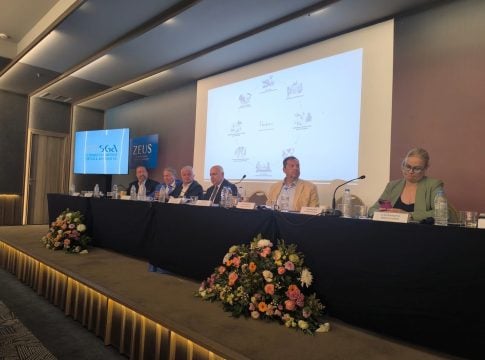
That was the key message of an event jointly organized by the Permanent Missions of Greece and Malta to the United Nations on the sidelines of the United Nations Counter-Terrorism Week 2026.
Held at U.N. headquarters in New York, the event brought together representatives from the U.N. Counter-Terrorism Committee Executive Directorate, the United Nations Office of Counter-Terrorism and the International Maritime Organization.
Greece’s Permanent Representative to the United Nations, Aglaia Balta, said that in an increasingly complex and asymmetric threat environment, freedom of navigation and the protection of maritime activity are essential prerequisites for international peace and security.
She noted that the maritime sector remains a cornerstone of global trade and economic development, facilitating the transportation of energy, food and other essential goods.


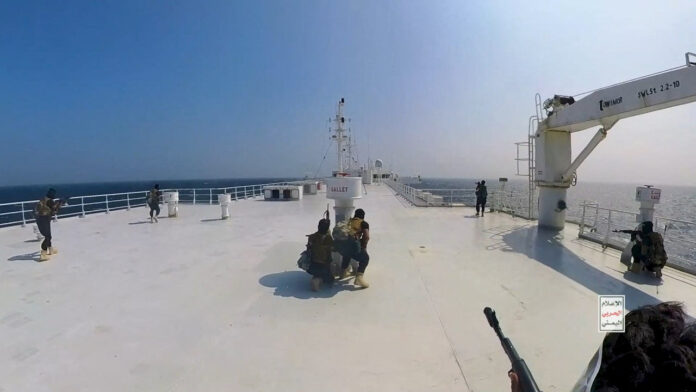
Balta warned that terrorist groups and transnational criminal networks are seeking to exploit vulnerabilities across the maritime sector. Attacks against commercial shipping, ports and critical maritime infrastructure threaten freedom of navigation, disrupt global supply chains and can have serious humanitarian and environmental consequences for coastal communities, she said.
Against this backdrop, she stressed the need for closer cooperation among governments, international and regional organizations, the private sector and the global shipping industry.
The Greek ambassador also highlighted the role of emerging technologies, arguing that artificial intelligence and innovation should be incorporated into maritime security strategies while remaining consistent with international law and human rights principles.
She further emphasized the importance of strengthening real-time information sharing, cybersecurity capabilities, port management systems and navigation technologies to improve the prevention and response to increasingly sophisticated threats.
Balta also drew attention to seafarers, noting that they are often among the first affected by attacks on commercial shipping and that their safety and well-being must remain central to maritime security efforts.
Referring to Greece as the home of the world’s largest merchant fleet, she said maritime security is not an abstract policy objective for the country but a strategic imperative.
She concluded by reaffirming Greece’s commitment to safeguarding maritime security and contributing to collective efforts aimed at ensuring safe, secure and open seas for all.
Για να εμφανίζονται περισσότερα άρθρα της Ναυτεμπορικής στις αναζητήσεις σας εύκολα και γρήγορα, πρέπει να προσθέσετε το site στις προτιμώμενες πηγές σας. Μπορείτε να το κάνετε πηγαίνοντας εδώ.