

The cruise industry’s energy transition will pass through LNG, but not as a final destination. Instead, it is viewed as a bridge toward renewable marine fuels.
MSC Cruises is stepping up investments in solutions such as bio-LNG, biofuels and shore power, while company executives stress that achieving net-zero emissions by 2050 will require a global regulatory framework, sufficient production of sustainable fuels and stronger financial incentives for shipping.
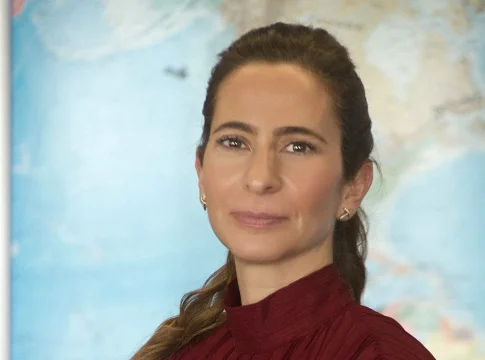
In an interview with Greek business daily Naftemporiki, MSC Cruises Chief Energy Transition Officer Michele Francioni said LNG is not the end goal of the cruise sector’s energy transition but an essential transitional fuel that will gradually lead to the use of renewable fuels and support the industry’s net-zero ambitions by 2050.
Bio-LNG
Francioni said the company has already moved from theory to practice by investing systematically in renewable fuels.
A key milestone was the 2023 voyage of the MSC Euribia, which operated using bio-LNG and achieved net-zero emissions. The experience led MSC Cruises to establish partnerships with producers and suppliers to secure sufficient renewable fuel volumes and begin broader deployment from 2025 onward.


According to Francioni, bio-LNG currently represents the most practical and cost-effective solution for vessels equipped with dual-fuel engines, offering one of the highest emissions-reduction potentials among commercially available renewable fuels.
He added that bio-LNG can be distributed through the existing European natural gas network using a mass-balance system, eliminating the need for new infrastructure.
In 2025, MSC Cruises used 6,856 tonnes of bio-LNG produced from sustainable feedstocks including food waste, whey, organic waste, sewage sludge and, primarily, animal manure, which accounted for more than two-thirds of the feedstock energy base. Animal manure delivers significant environmental benefits by capturing methane that would otherwise be released into the atmosphere while also producing organic fertilizer for agriculture.
Renewable Biofuels
For vessels that continue to use conventional fuels, MSC Cruises has also deployed renewable diesel biofuels.
One example was a four-month trial involving 100% hydrotreated vegetable oil (HVO) in one of the engines of the MSC Opera, without any technical modifications or blending with conventional fuel. Meanwhile, the MSC Seaview used a blend of HVO and biodiesel derived from used cooking oils together with very low sulfur fuel oil (VLSFO).
Overall, the use of renewable fuels in 2025 resulted in an estimated reduction of approximately 48,700 tonnes of carbon dioxide equivalent on a full life-cycle “well-to-wake” basis.
Francioni described LNG as a transitional but indispensable fuel. Even in its conventional form, he said, LNG reduces greenhouse gas emissions while significantly lowering air pollutants such as sulfur oxides, nitrogen oxides and particulate matter.
He noted that LNG’s strategic value lies in dual-fuel engine technology because it:
Enables the immediate use of renewable fuels such as bio-LNG and biodiesel, allowing substantial emissions reductions.
Utilizes existing global infrastructure, accelerating large-scale deployment.
Supports a realistic energy-transition pathway that allows renewable fuel use to increase progressively over time.
“We do not see LNG as the final destination of this journey,” Francioni said. “However, dual-fuel engine technology provides the flexibility to adopt the most cost-effective renewable fuels as they become available and gradually increase their use over time. This enables us to move forward through realistic and practical steps toward our long-term objective of achieving net-zero emissions by 2050.”
The Main Challenge
Discussing the sector’s biggest challenges, Francioni said technology is no longer the primary obstacle. Instead, the lack of a unified global regulatory framework for shipping emissions remains the key barrier.
While the European Union’s FuelEU Maritime regulation has established a clear pathway for reducing the carbon intensity of marine fuels, he said greater attention must now be directed toward effective financing mechanisms and incentives that can help bridge the cost gap between conventional fossil fuels and renewable alternatives.
He argued that a patchwork of regional and national regulations will not be sufficient to achieve the industry’s decarbonization goals. Given shipping’s global nature, effective international measures are essential to sustaining progress and successfully implementing the energy transition.
Francioni added that European environmental policies are already shaping MSC Cruises’ strategy. FuelEU Maritime has been a major driver behind increased investment in renewable fuels, with the company bunkering nearly 10,000 metric tonnes of bio-LNG, HVO and other renewable fuels in 2025.
By contrast, while the EU Emissions Trading System (EU ETS) creates a strong financial incentive to cut emissions, it also raises fleet operating costs. Only a small portion of ETS revenues currently flows back into funding shipping’s green transition, he said. MSC Cruises believes future reforms should allocate a larger share of those revenues toward innovative technologies and renewable fuel production.
Addressing today’s most pressing challenge, Francioni said sustainable marine fuels already exist but are not yet available at the scale required to support the sector’s full energy transition at economically viable costs.
He emphasized that accelerating the transition will require close cooperation across the entire value chain, including fuel producers, ports, regulators and industry stakeholders, to expand production capacity, develop the necessary infrastructure and improve the affordability of sustainable fuels.
Για να εμφανίζονται περισσότερα άρθρα της Ναυτεμπορικής στις αναζητήσεις σας εύκολα και γρήγορα, πρέπει να προσθέσετε το site στις προτιμώμενες πηγές σας. Μπορείτε να το κάνετε πηγαίνοντας εδώ.