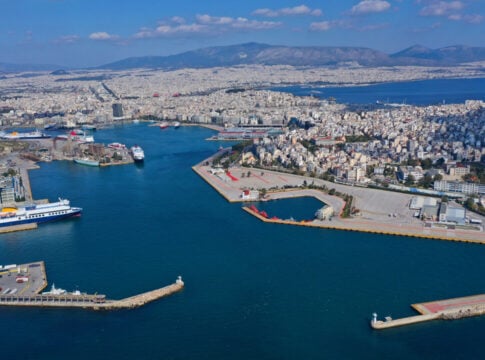

Greece’s cruise sector continues to post record-breaking growth, strengthening its contribution to the national economy as the development of new homeporting hubs and the digital transformation of destinations emerge as key priorities for the industry’s next phase.
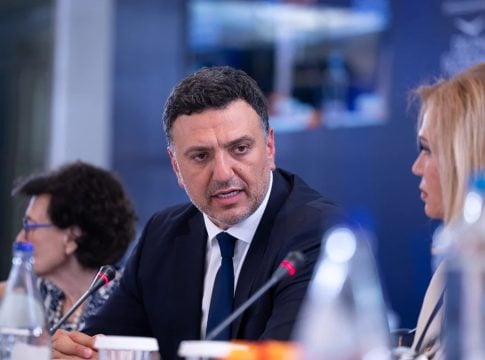
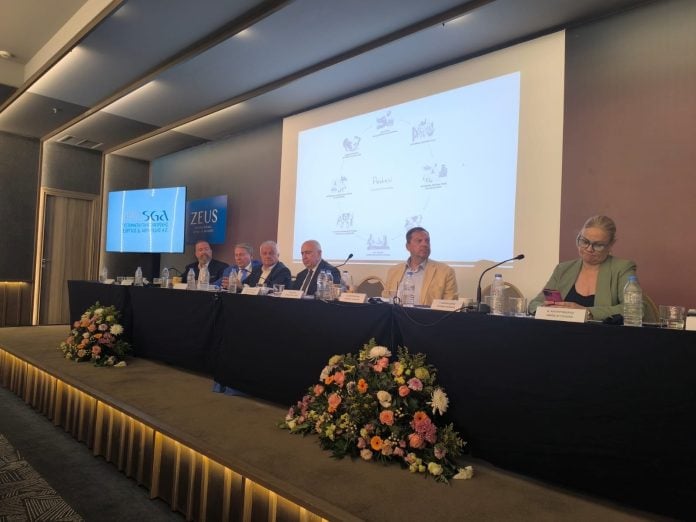
The outlook and challenges facing the cruise industry were highlighted during the General Assembly of the Central Union of Chambers of Greece, in Agios Nikolaos, Crete, where the CEO of the Heraklion Port Authority, Minas Papadakis, delivered the keynote address.
Papadakis said the cruise industry has evolved into a major global economic force, with the worldwide market reaching a record 37.2 million passengers.
Greece has remained among the sector’s top performers for a fourth consecutive year, with 2025 marking the strongest year in the country’s cruise tourism history. According to data from the Hellenic Ports Association and the Bank of Greece, the country recorded 6,129 cruise ship calls, 8.4 million passenger movements and 5.6 million individual cruise passengers.
Cruise-related travel receipts rose 4.9% to 1.166 billion euros, while the sector’s economic footprint tripled over the past three years, generating an estimated 3.1 billion euros in total economic output and contributing 1.55 billion euros to Greece’s gross domestic product, Papadakis said.


A key driver of this growth has been the expansion of homeporting operations, as passengers embarking or disembarking in Greece spend up to five times more than transit visitors. During a May 2026 working meeting, the Cruise Lines International Association identified the development of additional Greek homeports as a strategic priority, with cities including Heraklion, Thessaloniki and Patras seen as potential embarkation hubs.
Globally, around 70% of homeport passengers spend at least one night in the port city before or after their voyage, providing a direct boost to local hotels, restaurants and retailers. A study on Heraklion found that cruise activity generated approximately 60 million euros in added value for the local economy, underscoring the growth potential of regional ports.
Papadakis also stressed that destinations must adapt to changing traveller behaviour, noting that tourists increasingly use artificial intelligence tools to plan their trips and experiences. Destinations with limited digital visibility risk losing potential visitors before they even disembark, he said.
To maximise local economic benefits, CLIA and industry experts have identified five priority areas:
- strengthening connections between ports and urban centres,
- developing authentic inland excursions,
- promoting new destinations to ease congestion at established ports,
- expanding the homeporting network, and deepening cooperation with local communities.
Για να εμφανίζονται περισσότερα άρθρα της Ναυτεμπορικής στις αναζητήσεις σας εύκολα και γρήγορα, πρέπει να προσθέσετε το site στις προτιμώμενες πηγές σας. Μπορείτε να το κάνετε πηγαίνοντας εδώ.