
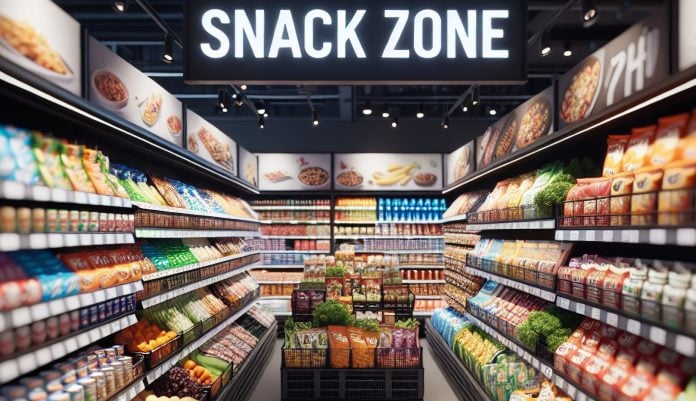
Snacking is increasingly becoming a dominant dietary habit worldwide, reshaping consumer choices and fueling a multi-billion-euro market.
The so-called “snackification” trend is changing the way consumers eat, with traditional meals being replaced more and more frequently by quick, convenient and personalized options that combine health, indulgence, convenience and emotional connection. According to the global State of Snacking 2026 report, produced by Mondelēz International in collaboration with Mintel and Black Swan Data, consumers are now seeking a new balance between wellness, pleasure and convenience.
The global study, which combines consumer surveys with AI-driven social media analysis, identifies six key trends:
A daily ritual: Around 60% of consumers worldwide eat snacks at least once a day. The figure rises to 66% in the United States (with 17% snacking more than three times daily), 70% in Australia and 61% in Germany. The trend is driven primarily by Generation Z, with 54% of young Germans and 38% of Americans aged 18-44 steadily increasing their snack consumption frequency.
Meal replacement: Some 41% of Americans and 44% of Australians replace a full meal with snacks at least once a week. Among consumers aged 18-24, 38% say snacking is less stressful than cooking, while 57% of those aged 25-34 consider it a more affordable option than a complete meal.


A social necessity and viral trend driver: More than two-thirds of consumers view snacks as essential to social gatherings. In the United Kingdom, 69% of those who hosted gatherings at home purchased savory (60%) and sweet (57%) snacks. At the same time, social media has become a key channel for discovering new products, with 31% of Brazilians and 52% of Germans aged 25-34 purchasing chocolate products inspired by global viral trends.
Relief from stress: The word “comforting” is the term Americans most frequently use to describe their relationship with snacks. In India, 73% of consumers say snacking provides an escape from everyday stress, while 43% of Britons consume chocolate as a form of reward or relaxation after a difficult day.
The dominance of texture: Innovation is shifting from flavor to sensory experience. Some 67% of Germans are attracted to products that combine different textures, while 35% of teenagers in India seek snacks that are crunchy on the outside and soft on the inside.
The power of nostalgia: More than half of Americans (52%) prefer snacks marketed through nostalgic themes or retro packaging. Across Europe (France, Germany, Italy, Spain and Poland), two out of three consumers remain loyal to the potato chip brands they enjoyed during childhood.
Strong momentum in Greece
These trends are also gaining strong momentum in Greece, where the packaged snack market in retail chains now exceeds 1.5 billion euros. The category has demonstrated remarkable resilience, recording a 7.6% increase in value during the first quarter of 2026, according to Circana data, significantly outperforming the overall fast-moving consumer goods (FMCG) market, which grew by 6.2%. In terms of sales volume, snacks posted growth of 2.1% during the same period.
Clinical nutritionists told Naftemporiki that the shift toward snacking is often linked to emotional and external hunger, beyond the body’s biological need for food. External hunger refers to situations in which environmental cues trigger consumption—for example, walking past a bakery, smelling freshly baked goods and deciding to buy a cheese pie. Food frequently serves as a mechanism for managing emotions, a phenomenon that affects not only overweight individuals but also people of normal weight.
Για να εμφανίζονται περισσότερα άρθρα της Ναυτεμπορικής στις αναζητήσεις σας εύκολα και γρήγορα, πρέπει να προσθέσετε το site στις προτιμώμενες πηγές σας. Μπορείτε να το κάνετε πηγαίνοντας εδώ.