

Greek shipowners currently hold the world’s largest orderbook for high-tech, advanced-specification vessels being built at Japanese, South Korean and Chinese shipyards.
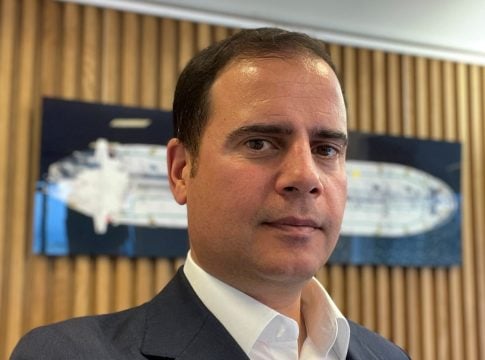
The observation was made by Haralambos Fafalios during the annual general meeting of the Greek Shipping Co-operation Committee in London. Fafalios, who was re-elected Chairman of the Committee, highlighted the leading position of the Greek-owned fleet on the global stage, noting that Greek shipowners are simultaneously and continuously selling older, less energy-efficient vessels across all segments and replacing them with newer and more efficient ships already in operation.
Greek seafarers
The Committee Chairman also referred to Greek seafarers and the Greek flag.
“Greek seafarers are among the greatest strengths of Greek shipping. We must continue to train new generations of Greek officers and crews capable of operating the ships of today and tomorrow and delivering the quality of management required in the modern maritime environment,” Fafalios stressed.
Regarding the Greek flag and the Greek state, he underlined that they remain an integral component of the strength and significance of the shipping sector.


However, he added, “the Greek state must do more to make the Greek flag more attractive, and this will not be achieved unless the bureaucracy associated with Greek-flagged vessels is substantially reduced.
At present, the registration and deregistration of vessels are time-consuming and unnecessarily complex procedures. This must change, as must the operation of the relevant public services beyond standard office hours.
The maritime education sector is equally critical. We need more highly qualified Greek officers and seafarers to serve the continuously expanding and increasingly technologically sophisticated fleet entering Greek shipping.
We need more places in public and private maritime academies, as well as better-paid and more numerous teaching staff, in order to produce seafarers that can meet the needs of our fleet. The academies themselves must also be upgraded.
Today’s seafarers are tomorrow’s shipowners and chief executives. Greece must strengthen its position as an international shipmanagement centre; this responsibility should not be transferred to other parts of the world.”
More specifically, Fafalios called on the Ministry of Maritime Affairs and Insular Policy—while acknowledging the progress already achieved—to proceed with a substantial reduction in the bureaucratic burden associated with Greek-flagged vessels.
Otherwise, he warned, “the Greek flag risks losing its significance for Greek-owned shipping.
What is needed is action, not promises. Without recognition of the strength of this relationship, the Greek shipping cluster would not be as prominent as it is today.
This bond must be preserved and strengthened in order to ensure a dynamic and sustainable maritime sector in the future.”
Για να εμφανίζονται περισσότερα άρθρα της Ναυτεμπορικής στις αναζητήσεις σας εύκολα και γρήγορα, πρέπει να προσθέσετε το site στις προτιμώμενες πηγές σας. Μπορείτε να το κάνετε πηγαίνοντας εδώ.