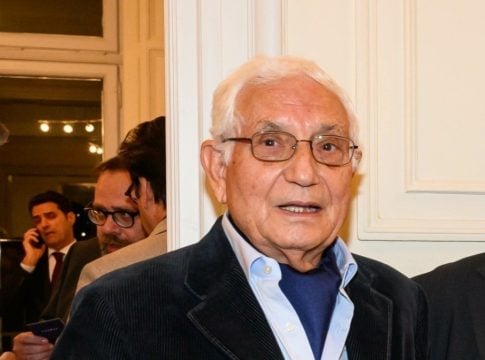

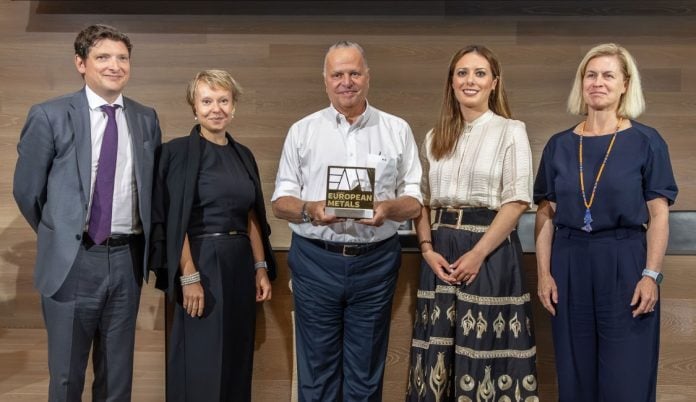
The European metals industry faces a packed policy agenda as Inge Hofkens, chief operating officer of multimetal recycling at Aurubis, assumes the presidency of European Metals, succeeding Evangelos Mytilineos, executive chairman of METLEN.
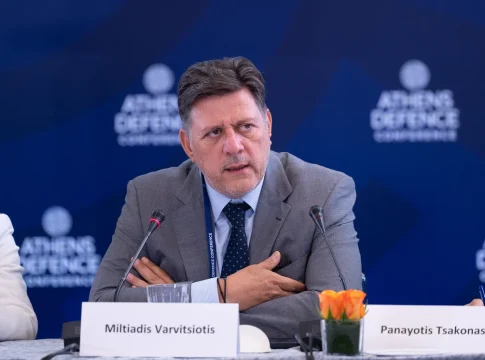
The handover took place during the association’s general assembly in Athens, hosted at METLEN’s headquarters and attended by board members, industry representatives, officials from the European Commission and the Greek government.
Hofkens takes over at a pivotal moment for the sector, following Mytilineos’ four-year tenure, during which metals and critical raw materials moved to the forefront of European policy discussions.
Among the key topics discussed at the Athens assembly were the EU’s Critical Raw Materials Act (CRMA), energy costs, circular metallurgy, metals recycling, measures targeting aluminium and copper scrap exports, and policies aimed at strengthening Europe’s industrial base.
According to Hofkens, high energy costs remain one of the industry’s most pressing challenges. The European Union is preparing a new package of measures expected to be unveiled in the coming weeks, including faster deployment of electricity grids, lower network charges, expanded use of contracts for difference, reduced electricity taxation and accelerated electrification of the economy.


In September 2026, the EU is expected to introduce measures aimed at limiting exports of aluminium scrap to non-EU countries, with similar restrictions on copper scrap exports expected to follow.
Industry representatives estimate that the loss associated with aluminium and copper scrap exports amounts to around 1 billion euros annually. The objective is to retain more secondary raw materials within Europe and boost recycling to meet the bloc’s industrial needs.
Europe’s aluminium sector is closely watching the upcoming measures, which are intended to curb the outflow of aluminium scrap outside the EU and reduce the loss of resources considered essential to the industry’s long-term sustainability.
Producers argue that high scrap prices, large export volumes and what they describe as unfair practices by competing countries threaten not only the economic viability of the European aluminium sector but also the EU’s environmental objectives, competitiveness and economic security.
The industry notes that primary aluminium production currently covers only 52% of EU demand, while recycling accounts for as much as 43%, underlining the strategic importance of keeping aluminium scrap within Europe.
Aluminium can be recycled indefinitely without losing its properties, while recycling requires roughly 95% less energy than primary production.
EU aluminium scrap exports reached 1.2 million tonnes in 2024, up 66% from 2014 and 50% from 2019. The increase has been driven by higher global prices, growing demand for scrap materials and the absence of export duties. Industry groups also argue that some countries support domestic recycling and metals producers through subsidies, enabling them to pay higher prices for scrap.
Greek metals producer ElvalHalcor has been among the companies advocating tighter controls on exports of secondary critical raw materials from Europe.
The company’s aluminium rolling division called on EU institutions to swiftly adopt effective trade measures to halt scrap exports outside the bloc. ElvalHalcor has also been active in discussions on restricting copper scrap exports.
The EU’s Circular Economy Act is expected to enter into force in October 2026. The legislation focuses largely on metals recycling and is regarded as one of the sector’s most important policy initiatives.
At the same time, strengthening manufacturing has become a central objective of the EU’s industrial strategy, with a target of increasing industry’s share of the bloc’s GDP to 20% by 2035 through measures contained in the forthcoming Industrial Accelerator Act.
Speaking at the assembly, Aleksandra Kordecka described the Industrial Accelerator Act (IAA) as the flagship of the EU’s new industrial policy.
The first pillar aims to stimulate demand for low-carbon European industrial products, including steel, aluminium, cement and other strategic materials, through public procurement and support mechanisms.
The second pillar focuses on accelerating permitting procedures through digitalisation, simplified administrative processes, one-stop shops, clear timelines and designated industrial acceleration zones.
The third pillar seeks to improve the quality of investment by ensuring that foreign direct investment in strategic sectors contributes to technology transfer, job creation, local supply chains and industrial capacity within the European Union.
Kordecka said the metals sector sits at the centre of the EU’s major policy priorities, including climate neutrality, critical raw materials, defence, digitalisation, electricity networks and industrial resilience, adding that the European Commission would continue supporting companies that invest, innovate and create value in Europe.
In the same context, James Watson, director general of European Metals, said the association remains a powerful advocate for the sector.
“We are a strong voice and presence defending Europe’s metals industry. The European Commission knows how important we are,” Watson said.
Για να εμφανίζονται περισσότερα άρθρα της Ναυτεμπορικής στις αναζητήσεις σας εύκολα και γρήγορα, πρέπει να προσθέσετε το site στις προτιμώμενες πηγές σας. Μπορείτε να το κάνετε πηγαίνοντας εδώ.