
Amid an environment of geopolitical turmoil, regulatory uncertainty and heightened business risk, the shipping industry is once again being called upon to demonstrate its resilience and adaptability. This was the central message of this year’s TradeWinds conference at Posidonia 2026, where leading industry executives and prominent shipowners discussed the evolving dynamics shaping the sector.
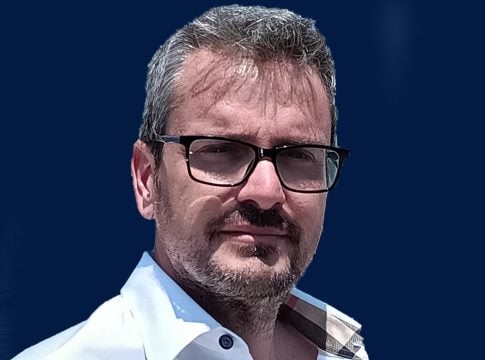
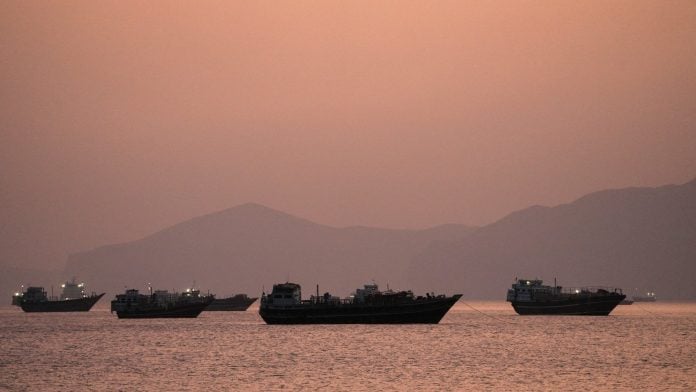
Offering his perspective on how shipping must navigate the intersection of geopolitical risk and the energy transition, Capital Group Founder and Chairman Evangelos Marinakis addressed delegates during the conference. A key focus of the discussion was the Strait of Hormuz crisis, with Marinakis noting that the group had been fortunate not to have vessels operating in the area when the crisis erupted. He stressed, however, that the company’s position was unequivocal: “no activity in the region.” As he explained, in an already strong market there is little justification for assuming such risks in pursuit of a few million dollars in additional revenue when the potential loss of human life renders any such calculation meaningless.
Addressing safety concerns, Marinakis stated: “To ensure that vessels can transit safely, I would have no objection to paying fees of 100,000 or 200,000 per cargo.”
As he further explained, the shipping industry has effectively been paying a geopolitical risk premium for years. Marinakis added that revenues generated from such fees “could be utilized for the reconstruction of the region.”
Regarding market prospects, he expressed the view that any reopening of the area would provide medium-term support to freight markets, primarily driven by the need to replenish inventories. However, he does not expect a return to the exceptionally high freight rates recorded during the initial phase of the crisis. He also noted that even if some form of fee or transit charge were introduced in the future, it could prove manageable when compared with the costs, uncertainty and war-risk premiums that the industry has already borne for years.


Marinakis placed significant emphasis on the green transition. He defended the industry’s investment in LNG, arguing that while it may not yet deliver optimal commercial returns, it has the potential over the longer term—provided natural gas prices decline—to offer both lower emissions and economic benefits.
At the same time, Marinakis was highly critical of what he described as distortions in European policymaking, particularly regarding sanctions and the shadow fleet, arguing that Europe often ends up penalizing itself. He called for more decisive measures to remove such vessels from the market, stressing that current policies are inadequate in light of the environmental and operational risks involved.
Για να εμφανίζονται περισσότερα άρθρα της Ναυτεμπορικής στις αναζητήσεις σας εύκολα και γρήγορα, πρέπει να προσθέσετε το site στις προτιμώμενες πηγές σας. Μπορείτε να το κάνετε πηγαίνοντας εδώ.