
Artificial intelligence is no longer a tool of the future. It is already here—quietly reshaping the way we search for information, organize our work, and make decisions.
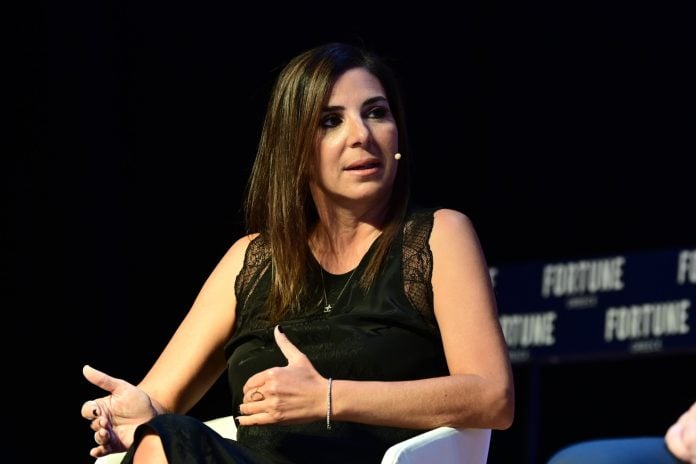
“It feels like we’ve reached a point where you can simply talk to a machine and it responds in the most natural way,” Peggy Antonakou, Regional General Manager of Google for Southeast Europe, tells Naftemporiki.
We met Antonakou at the 11th Delphi Economic Forum, where she described a profound shift in user behavior. “People now ask questions in a much more complex and conversational way. We ask as if we’re speaking to each other,” she explains. Search is turning into dialogue, and AI into a “soft” personal assistant—capable of planning a trip, explaining information, or processing data, all without requiring technical expertise. “You don’t need to know how to code—or even how to type. You can speak or use an image,” she adds.
SMEs: Access to Capabilities Once Out of Reach
For the Greek economy—dominated by small and medium-sized enterprises—the impact is transformative.
“More than 90% of those who have used AI have seen either increased revenue or higher productivity and lower costs,” Antonakou notes.


AI acts as a business “accelerator,” enabling faster data analysis, deeper customer understanding, and content creation at speeds that would have seemed unimaginable just a few years ago. “You can create a video in minutes, whereas it used to take days and significant cost,” she says.
Perhaps most importantly, geographic barriers are disappearing. “You can be on Kasos and reach a global audience.” Businesses can now run campaigns in dozens of languages without translation costs and identify customers worldwide.
Labor Market: “94% Will Be Positively Affected”
The speed of change has fueled fears about job losses. But the data tells a more nuanced story.
“Only 6% of jobs will be negatively affected. The remaining 94% will either benefit or remain unaffected,” she says, citing research focused on Greece.
AI, she explains, does not replace—it augments. “You will do your job better and faster. You will have access to more knowledge.” A doctor can interpret data more effectively; a journalist can accelerate research.
At the same time, she stresses responsibility. “We are talking about the most powerful tool we have ever created. It requires responsibility—from those who build the technology, from those who develop solutions, and from how it is used.”
Misinformation: Technology as Part of the Solution
Another major concern is AI’s ability to generate convincing false content. Here too, Antonakou points to technology as part of the answer.
“Gemini embeds a digital signature in AI-generated content,” she explains.
Still, she insists that technology alone is not enough. “It requires knowledge, responsibility, and ultimately, intention.”

The Skills That Will Make the Difference
In a rapidly changing world, three skills stand out as essential: adaptability, curiosity, and a willingness to learn.
Antonakou emphasizes the importance of hands-on familiarity with AI tools. “They are already here—they talk to you, they suggest solutions. We need to experiment.”
She also highlights a gender gap: while many women recognize the importance of AI, only a small percentage actively use it. “This is a gap we need to close,” she says, noting that the technology is now fully accessible.
Education: “Knowledge Is in Our Hands”
Education plays a pivotal role in this transition. Google is actively involved in a structured training program for public sector employees in collaboration with the Greek government.
The initiative—implemented with the Ministry of Interior and the National Centre for Public Administration and Local Government—aims to strengthen digital skills and promote the practical use of AI in everyday public-sector operations.
Between 2024 and 2025 alone, more than 35,000 public employees participated in AI training programs through dozens of sessions focused on practical applications.
This effort is part of the broader “AI for All” initiative, which seeks to make artificial intelligence accessible across public administration, improving both efficiency and the quality of citizen services.
At the same time, Google runs free training programs for professionals, students, and job seekers, as well as initiatives in schools and universities.
As Antonakou puts it, education “is now in our hands”—and is the key to turning technology from potential into real impact.
AlphaFold: When AI Accelerates Science
Perhaps the most striking demonstration of AI’s power lies in science.
AlphaFold, developed by Google DeepMind, solved a decades-old challenge: predicting the three-dimensional structure of proteins.
For years, this process required painstaking and costly work. Today, it can be done in a fraction of the time.
The AlphaFold database is used by more than 3 million researchers in over 190 countries and includes over 200 million protein structures—work that would have taken hundreds of millions of years using traditional methods.
More than 30% of related research focuses on understanding diseases, and the breakthrough was recognized with the Nobel Prize in Chemistry in 2024. The next generation, AlphaFold 3, expands capabilities to DNA, RNA, and drug molecules, opening the door to a new era of “digital biology.”
“We Are the Generation at the Wheel”
Looking ahead, what does Antonakou see as the biggest change AI will bring in the next five to ten years?
“I’ll tell you what I hope and what I dream of: to see a massive leap in science, in the speed at which it advances… Let’s hope that within the next decade we will have found ways to solve the fundamental diseases that affect humanity.”
Ultimately, she believes the real question is not about technology itself, but about how we choose to use it.
“We are the generation at the wheel of this transformation,” she says. “Let’s save time from tasks that don’t require human thinking—and invest it in empathy, ethics, and what truly makes us human.”
Για να εμφανίζονται περισσότερα άρθρα της Ναυτεμπορικής στις αναζητήσεις σας εύκολα και γρήγορα, πρέπει να προσθέσετε το site στις προτιμώμενες πηγές σας. Μπορείτε να το κάνετε πηγαίνοντας εδώ.