
Against the backdrop of rapidly escalating developments in the Middle East, shipping markets are reacting to the crisis with significant upward pressure on rates.
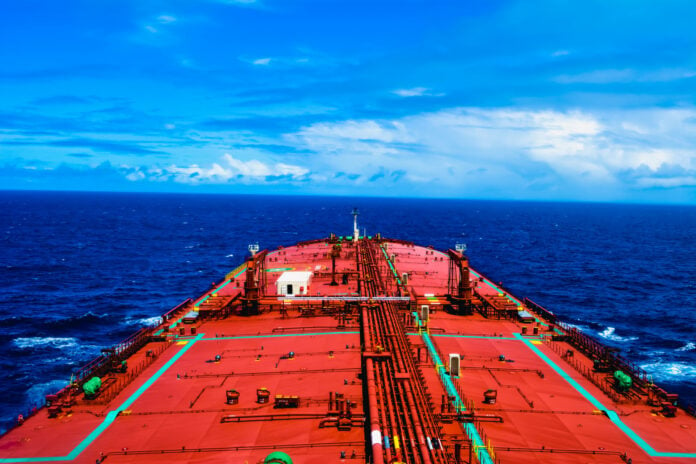
Freight rates and ship values now incorporate increased geopolitical risk, with tankers moving on a trajectory of further increase, due to soaring war risk premiums and massive bypasses of critical sea routes, as Xclusiv Shipbrokers pointed out in its analysis in “N”. For example, several brokers’ chatrooms report a VLCC from Sinokor as fixed for a voyage from the Arabian Gulf to Asia (AG-East) at 550,000 dollars per day.
A Suezmax is also reported as fixed for the same route, at over 320,000 per day.
If both voyages go ahead, the freight market would register historic highs in both cases.
At the same time, the derivatives market reflects heightened volatility, with March Forward Freight Agreements (FFAs) for VLCCs hovering around 400,000 per day, indicating that participants are pricing in sustained exceptionally high levels over the coming weeks.


However, according to Xclusiv analyst Dimitris Roumeliotis, the real “red line” is not just freight rates, but insurance: without coverage, there is no trade.
Although the base scenario does not foresee a full or prolonged closure of the Strait of Hormuz—such a move would deprive Iran itself of revenue and primarily impact Asian economies—even a de facto disruption of flows, through insurer withdrawal and owners’ abstention, produces the same effects: a sharp drop in shipments, explosive price increases, and significant volatility in global energy and shipping markets.
Meanwhile, George Tsafonias of brokerage firm George Moundreas & Co told Naftemporiki that recent U.S. and Israeli military strikes in Iran have put global shipping on the highest state of alert.
According to him, the impact on the tanker sector is immediate and severe, with Brent crude surging 13% to 82 dollars a barrel in early trading today before settling at 79 dollars, reflecting a potential daily shortfall of 20 million barrels that normally transit the Strait of Hormuz.
In addition, Tsafonias noted that the escalation has sent strong shocks through global natural gas markets, as roughly 23% of global LNG supply passes through the strait.
Qatar’s exports, which rely almost entirely on this route, are now effectively under an informal blockade.
As a result, European benchmark prices (Dutch TTF) jumped more than 20%, while Asian spot prices are projected to soar by up to 130% if the paralysis continues.
Meanwhile, hopes for a mass return of container ships to the Red Sea have evaporated. Major carriers, including Maersk, CMA CGM, and Hapag-Lloyd, have suspended transits through the Suez Canal due to renewed Houthi threats.
The disruption is forcing massive rerouting via the Cape of Good Hope, straining global shipping capacity and keeping freight rates elevated.
Without a rapid restoration of safe passage, Tsafonias expects a prolonged period of heightened volatility and a structural shift in global trade routes.
Για να εμφανίζονται περισσότερα άρθρα της Ναυτεμπορικής στις αναζητήσεις σας εύκολα και γρήγορα, πρέπει να προσθέσετε το site στις προτιμώμενες πηγές σας. Μπορείτε να το κάνετε πηγαίνοντας εδώ.