
The European Union is considering implementing a stricter framework for foreign investment in ports.
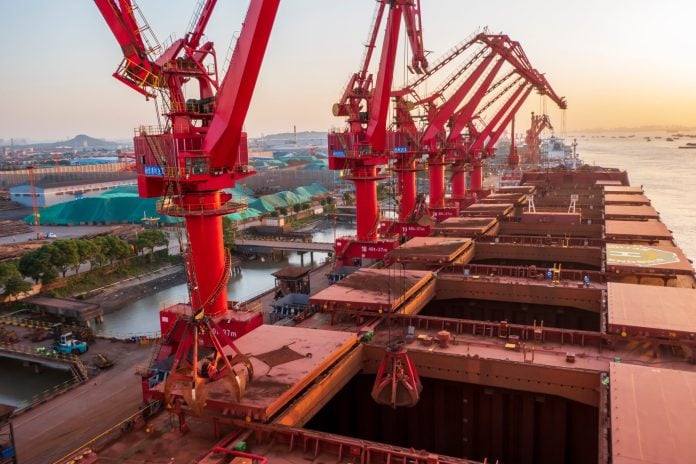
As part of the new European strategy for ports, which is expected to be presented by the end of February, foreign investment in European Union ports is to be assessed for potential security risks.
In a report, Lloyd’s List – which, as it says, has the drafts of the agreement at its disposal – stated that, under the new guidelines, ports will be able to be characterized as strategic dual-use infrastructure, critical for military mobility but also for security.
They will be subject to what a draft of the upcoming European ports strategy describes as “a thorough assessment by member states, aimed at mitigating the risks arising from foreign ownership, operational control and equipment from high-risk suppliers.”
The draft also noted that “this process should include the clearly defined possibility of acquiring temporary public control or right of use”.


Both the new port strategy and the maritime industry strategy under development are expected to place particular emphasis on limiting potential security risks arising from third-country investments in European ports.
Policy documents recognize that the maritime sector is now considered “a strategic asset for the autonomy, resilience, defence, economic security and prosperity of Europe”, according to Lloyd’s List.
Risk assessment
According to drafts, the European Commission will develop additional guidelines for member states on the port sector, with criteria for assessing foreign investment in line with horizontal institutional tools and international commitments.
According to the publication, this may include a systematic classification and risk assessment for ports, terminals, port service providers, managers, workers and energy companies operating in ports, in relation to their role in critical supply chains or military mobility.
At the same time, a new framework for mapping and monitoring foreign investment in EU ports will be established.
Surveillance
The new strategic reviews will also include the launch of a Maritime Domain Awareness (MDA) initiative, i.e. an integrated approach to strengthen surveillance at EU level, as well as new programmes for the development of dual-use infrastructure and transport capabilities.
The EU Commission will also promote, within the framework of the maritime strategy, a support program for the construction of dual-use ferry vessels, with the aim of mobilising financial resources for additional investments linked to military specifications in ships built in Europe and capable of being deployed on strategically critical routes.
The ports strategy will affect critical ports as key dual-use infrastructures, which require enhanced security, resilience against threats and improved connectivity.
Member States will identify key ports to be designated as such, with investments focused on the ability to rapidly move heavy and oversized military equipment.
The drafts repeatedly underline that public funding to entities operating in EU ports that are directly or indirectly under foreign control should be carefully assessed.
Για να εμφανίζονται περισσότερα άρθρα της Ναυτεμπορικής στις αναζητήσεις σας εύκολα και γρήγορα, πρέπει να προσθέσετε το site στις προτιμώμενες πηγές σας. Μπορείτε να το κάνετε πηγαίνοντας εδώ.