
Market executives are optimistic about the impact of the Free Trade Agreement between the EU and India on the shipping industry.
If the deal is sealed, it is a potential catalyst for increased volumes, new sea routes and investments in “green” infrastructure, as the deal is expected to reshape Europe-Asia trade flows.
And this is due to the drastic reduction in tariffs on critical products and the creation of new prospects for all key shipping sectors.
Higher demand
Speaking to “N”, George Tsafonias, an analyst at the shipping brokerage George Moundreas & Co, noted that, in addition to tariff reductions and broader macroeconomic benefits, the India-EU agreement lays the foundation for an increase in sea freight and a structural boost in demand on the India-Europe trade corridor.
According to Tsafonias, bilateral trade in goods between the EU and India exceeded 120 billion euros in the period 2024-2025 (end of March 2025), with EU imports from India (around 71 billion euros) exceeding exports (around 49 billion euros), while services provide an additional 60 billion euros to cross-border flows.

Therefore, as he said, with the abolition or significant reduction of tariffs, official EU estimates converge on the fact that European exports to India could double by 2032, suggesting an additional increase in trade flows of around 100 billion euros over a decade.
For the shipping industry, the analyst pointed out that these developments translate into important factors boosting demand.
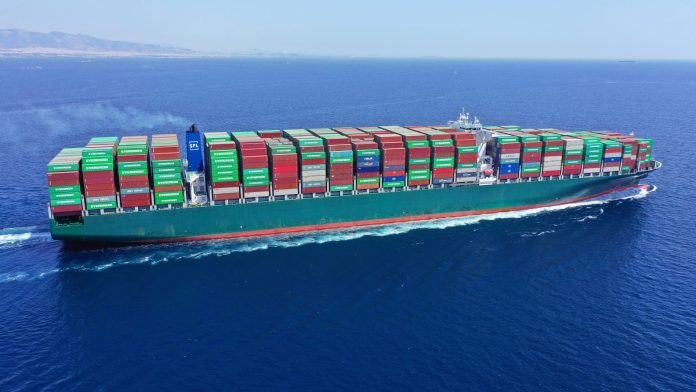
Container traffic on the India – Northern Europe axis is expected to increase, as a number of products benefit from trade liberalization.
According to some initial estimates, the agreement could boost transported volumes in this trade lane by up to 20%-30% compared to current scenarios, as there will be a restructuring of supply chains and the exploitation of new comparative advantages.
Based on more conservative estimates, based on what Tsafonias told “N”, a gradual increase in the annual movement of TEUs towards double-digit rates between Indian and European ports could lead to higher rates of utilization of the existing fleet (fleet utilization rate) and by extension to greater resilience of freight rates.
At the same time, the forecast offered by the gradual implementation of the agreement strengthens the conclusion of long-term agreements/contracts and supports demand for specific container segments.
As for the remaining sectors, the EU-India agreement is expected to have structural, although less direct, consequences in dry bulk and tankers, mainly through the strengthening of industrial production and energy demand.
In dry bulk, the gradual increase in European exports of goods and the acceleration of infrastructure and processing investments in India imply higher demand for minor bulks, such as steel products, scrap, fertilizers, minerals, etc.
In the tanker sector, the consequences are expected mainly through the increase in refined and chemical product flows. This translates into positive prospects for product and chemical tankers.
The Ro-Ro and PCTC sector is expected to benefit from the increased movement of vehicles, industrial equipment and rolling cargo.
Gradual impact
On its part, Xclusiv Shipbrokers emphasized to “N” that the Europe-India trade agreement is undoubtedly expected to support the shipping industry, but at first glance it is not estimated that it will be an immediate or significant catalyst that will radically change the fundamentals of global shipping in the near future.
Specifically, as the shipping brokerage house stated, despite the fact that bilateral trade already exceeds 180 billion euros and India is seeking a “way out” of high US tariffs, the impact of the agreement will be gradual, focusing mainly on the organic strengthening and stabilization of existing shipping flows between the two regions.
Based on the same assessment, the gradual reduction of tariffs under Modi’s policy will stimulate cargo flows in the medium term, offering a reliable alternative to China, but without causing, at least at this stage, the sharp increase in demand that would characterize a real “game-changer”.
Για να εμφανίζονται περισσότερα άρθρα της Ναυτεμπορικής στις αναζητήσεις σας εύκολα και γρήγορα, πρέπει να προσθέσετε το site στις προτιμώμενες πηγές σας. Μπορείτε να το κάνετε πηγαίνοντας εδώ.