
The trade agreement between the European Union and India, after 20 years of negotiations, is described as one of the largest trade agreements in the world.
But what role can Greece play in this new phase of trade cooperation, what obstacles must it overcome and what prospects are opening up?
The Piraeus Chamber of Commerce and Industry has demonstrated the importance of developing India’s maritime connectivity with the port of Piraeus since 2023, foreseeing the trend for the development of a planned India-Middle East-Europe Economic Corridor (IMEC).
The European Union-India Free Trade Agreement significantly expands the economic and strategic relationship between the two sides, which is already recording a very strong annual growth of 8.2%. It covers a market of around 2 billion people, representing around 25% of global GDP and over 30% of world trade.
Tariff cuts
Tariff cuts are expected to double EU exports to India by 2032, saving European businesses around 4 billion euros a year. Tariff cuts are expected on 96.6% of goods the EU exports to India over the next 5–7 years.


Similarly, the EU will cut tariffs on around 99% of products it imports from India, meaning much cheaper access to products such as machinery, cars, chemicals, medicines, textiles and leather. Tariffs on the 250,000 European cars imported into India each year will fall to 10% from 110%. Wines and alcoholic beverages will gradually have lower tariffs, while facilities are provided for financial services and investment protection.
Opportunities for Greece
Greece can actively contribute to this new phase of trade cooperation, leveraging its geostrategic position and the potential of its port infrastructure for the benefit of the domestic economy, opening new horizons for further economic development, innovation and investment. The trade agreement between Europe and India, from which Greece expects benefits, is a catalyst for the interconnection of entrepreneurship, technology and supply chain ecosystems.
In this context, the Greek port system, as a focal point of geographical interconnection, can play a leading role, in synergy with shipping and logistics, which offer a mature and reliable environment for collaborations with Indian businesses.
Bilateral Trade
Greece and India have strengthened their bilateral relations with a high level of political trust and visits by leaders from both sides, with the aim of doubling trade by 2030 while enhancing cooperation in investment and infrastructure. According to available data, bilateral trade has increased to approximately 1.95 billion dollars and is expected to continue to strengthen, with the aim of reaching 5 billion dollars by 2030 in total trade in goods and services, provided that relations and agreements are strengthened.
Greece is seen, from the Indian side, as an important gateway to the EU, especially with infrastructure projects in air and rail networks, as well as with increased interest in investments in Greek ports, which will positively affect trade flows in the future. The main products that Greece imports from India include pharmaceuticals and textiles, machinery and electrical equipment, chemicals and plastics, rice and spices. Greece’s exports to India include aluminium, minerals, salts, chemicals, copper, fruits, marbles and construction materials.
Bilateral trade is characterised by a strong asymmetry with a negative trade balance for Greece. However, there is scope for strengthening Greek exports, particularly in high value-added sectors, as the agreement opens up additional opportunities for selling products to the Indian market, which can benefit Greek businesses in the context of wider value chains. Despite the small size of Greek exports, India is a strategic market with high potential.
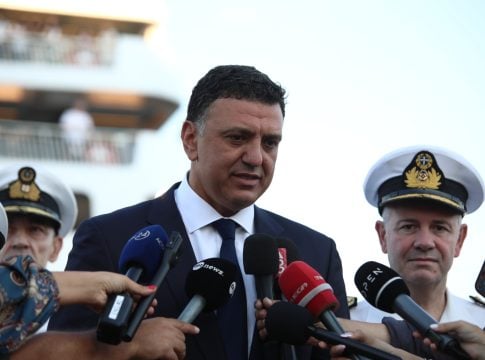
Highlighting the benefits of the agreement, the president of the Piraeus Chamber of Commerce and Industry, Vassilis Korkidis, noted that “it has broader geopolitical significance for Europe in a period of tensions with third countries.” At the same time, he added, “it strengthens the EU’s multilateral trade strategy, reducing dependence on other Asian markets and creating links with one of the fastest growing economies in the world. The cooperation creates the conditions for the exchange of know-how, the development of joint investment schemes and the promotion of supply chains through Greece.”
However, as he pointed out, “every trade agreement has strengths and weaknesses, as well as risks and opportunities. Greece must leverage its strengths with its strong shipping, which offers low transportation costs, as well as its position as a gateway to the EU, in order to overcome the weakness of the low penetration of Greek products in the Indian market and face intense competition to seize the opportunities that are available to it.”
Για να εμφανίζονται περισσότερα άρθρα της Ναυτεμπορικής στις αναζητήσεις σας εύκολα και γρήγορα, πρέπει να προσθέσετε το site στις προτιμώμενες πηγές σας. Μπορείτε να το κάνετε πηγαίνοντας εδώ.