

European banks are expected to remain resilient in 2026 in terms of their profitability and liquidity, with geopolitical risk, however, increasing more and more, as ECB President Christine Lagarde has repeatedly stated.
The successive reports of the last few quarters of the European Banking Authority, as well as the European Central Bank, highlight the consistently healthy asset quality of European banks, their resilient solvency and liquidity, as well as their unwavering profitability, but the challenge of geopolitical risk lurks and for this reason, in 2026, geopolitical stress tests will be conducted for the first time on 110 European banks.
At the very least, the banks’ financial mix (liquidity, assets, funding, etc.) indicates that a solid foundation has been laid to address the risks arising from international turmoil in the global political and financial scene.
At the same time, a reversal of the previous trend was observed in 2025. Southern European banks showed signs of greater and faster improvement than Northern and Central European banks, which created conditions for healthy competition within the monetary union and therefore it is no longer a two-speed monetary union for 2026.
In response to the international turmoil, it appeared that European banks, with UniCredit standing out, set themselves the goal of implementing the completion of the banking union in 2025, while 2026 is expected to be quite intense in terms of mergers and acquisitions (M&A), according to industry sources. In several countries there has been resistance, especially from governments, to such steps, but this does not rule out the possibility that 2026 may remove any obstacles and bring something new among European banks.


In terms of acquisitions, Greece stood out across Europe this year, as UniCredit found suitable ground to implement its expansion strategy through Alpha Bank. And it is not going to stop there, as Alpha Bank recently announced that its cooperation with UniCredit will expand in 2026 both in terms of product range and geographically. However, in other countries, such as Germany and Italy, UniCredit has encountered obstacles and it remains to be seen whether the new year will be favorable for Andrea Orcel’s plans in the rest of Europe.
Greek banks
Responding to international challenges and external competition, and aiming to maintain their liquidity and high profit levels, Greek banks seem to be following an even more extroverted path in 2026 than the one we already saw in 2025.
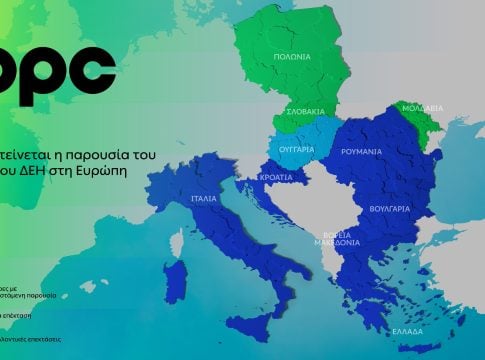
The first step in 2025 was the Cyprus market for both Alpha Bank and Eurobank, however in 2026 both are expected to strengthen their presence in the Balkans.
However, the biggest step for Greek banks in 2026 is going to be towards the East with the establishment of representative offices, opening up a trillion-dollar market.
Eurobank has already made its first moves in India and its goal is to develop through Cyprus in India, Saudi Arabia, the United Arab Emirates and Israel in 2026. On the other hand, Piraeus recently also revealed its plans for Abu Dhabi and the United Arab Emirates, which are expected to take shape in 2026.
The National Bank’s moves still remain unknown, but it is not ruled out that it will follow the path of the others, given its large capital adequacy.
Για να εμφανίζονται περισσότερα άρθρα της Ναυτεμπορικής στις αναζητήσεις σας εύκολα και γρήγορα, πρέπει να προσθέσετε το site στις προτιμώμενες πηγές σας. Μπορείτε να το κάνετε πηγαίνοντας εδώ.