
Against the backdrop of Western sanctions and the reorientation of its trade flows towards Asia, Russia is systematically investing in the Northern Sea Route, which Vladimir Putin has made a central pillar of his strategy.
The strengthening of trade through the Arctic passages is now gaining in importance, with oil shipments from Russian ports to China via the NSR underlining Moscow’s shift away from European markets.
At the same time, developments in the Russian Arctic are also meeting the United States’ renewed interest in the northern geostrategic space.
US President Donald Trump’s public statements on Greenland are part of a broader reading of the Arctic as a new field of geo-economic and maritime competition.
Greenland, located between the North Atlantic and Arctic Oceans, controls critical passages to the emerging Arctic sea routes, which are becoming increasingly important for global trade due to melting ice.


American interest is intensified by increasing Russian activity in the Arctic and China’s gradual penetration of ports, infrastructure and logistics in the North.
In this environment, the Northern Sea Route can become a new front of power in global trade and shipping.
The 2025 summer-autumn navigation season in the Northern Sea Route confirms this dynamic.
According to data from the Centre for High North Logistics (CHNL), one of the main international analysis bodies for shipping and logistics in the North and the Arctic, based in Norway, the first ship entered the route on June 30, 2025 and the last one left on November 17, 2025, forming a sailing period of approximately four and a half months.
By the end of November 2025, a total of 103 commercial voyages were recorded, carried out by 88 ships, without intermediate stops at ports in the region.
According to Rosatom, Russia’s state-owned group mainly active in the nuclear energy sector, total cargo volume increased by 3.2% to 3.2 million tonnes, while the number of ship voyages increased by about 6.2% compared to 2024.
Total deadweight (dwt) recorded a marginal increase of 1%, reaching 6.23 million tonnes from 6.16 million tonnes a year earlier, indicating that total traffic remained broadly stable on an annual basis.
Cargo movement
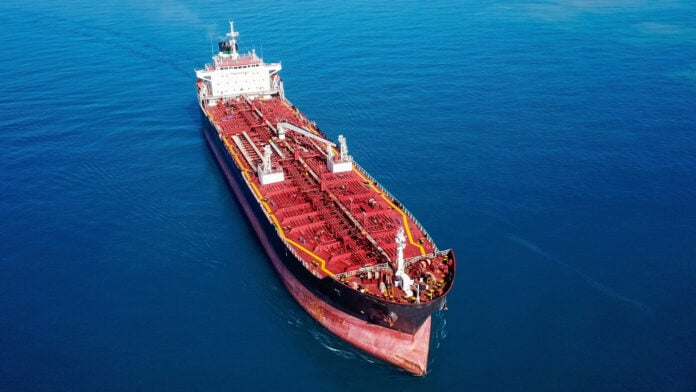
As reported by the Centre for High North Logistics (CHNL), the bulk of cargo movement in 2025 concerned tanker transport, as in 2024.
Tankers made 34 voyages, of which 23 were eastbound and 11 westbound, underlining the highly energy-intensive nature of the route.
Bulk carriers followed with 23 voyages, while container ships made 15 crossings, almost equally divided between eastbound and westbound voyages; general cargo ships completed 12 voyages, mainly westbound.
The Xin Xin Hai 1 also falls into this category, which made two voyages carrying containers, although it is formally classified as a general cargo ship.
LNG carriers were also present on five voyages, as well as fishing vessels, reefers and special vessels.
At the same time, international interest in the Northern Sea Route is growing, with South Korea planning a pilot container voyage this summer.
According to Seoul-based business publication ChosunBiz, a 3,000 TEU vessel is expected to sail from Busan to Rotterdam, following the NSR route, as part of broader maritime reforms. The plan was announced by Vice Minister of Oceans and Fisheries Kim Seong-beom.
According to reports from consultancy Alphaliner, the ship that will make the pilot voyage will fly the South Korean flag, constituting a test step in view of the possible launch of regular services via the NSR.
The ministry has pledged to invest in new ice-strengthened ship designs and the upgrading of Jinhae and Gwangyang ports to be ready to support Northern Sea Route services by 2030.
Seoul’s strategy is also based on a study by Pohang University, which estimates that the NSR will be fully accessible and operational by 2030.
In this context, South Korea is investing about 1.25 billion dollars in its shipping industry, while Minister Chung Jae-soo announced additional funding of 7.6 million dollars for each ice-class ship.
Για να εμφανίζονται περισσότερα άρθρα της Ναυτεμπορικής στις αναζητήσεις σας εύκολα και γρήγορα, πρέπει να προσθέσετε το site στις προτιμώμενες πηγές σας. Μπορείτε να το κάνετε πηγαίνοντας εδώ.