
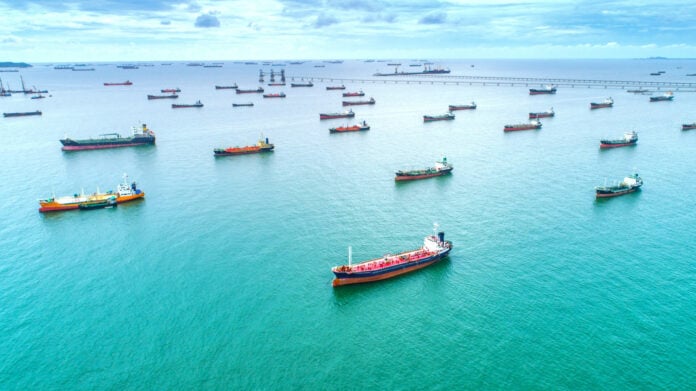
The Greek orderbook is expected to exceed in 2025 the 700-ship mark for the first time in a long time as it has 727 units under construction, confirming its leading role in shaping the global fleet of the next decade.
Tankers are the protagonists
The distribution reveals a clear preference for Panamax, Kamsarmax and Post-Panamax, which account for almost 60% of Greek orders in the segment.
This choice is not accidental. These sizes offer flexibility, better energy efficiency and easier adaptation to future fuels.
At the same time, the global bulker fleet has an average age of 12.4 years, with over 28% of ships being over 16 years old, which creates the ground for a wave of replacement in the coming years.


The strategy is clearly selective: Feeder and Neo-Panamax ships dominate, covering a total of over 70% of Greek orders.
At a global level, the containership orderbook has skyrocketed to 34% of the active fleet in TEUs, with the average age reaching 13.8 years and almost 46% of the ships being over 16 years old.
The Greek strategy reflects the need for renewal, but also the shift to markets with stable demand, such as regional and main international routes.
Long-term investments
The average age of the global LNG fleet is only 9.8 years, however the orderbook remains high, confirming the long-term importance of natural gas in the energy mix.
Correspondingly, in LPG carriers, the Greeks have 46 ships under construction or 15% of the global orderbook, with an emphasis on VLGCs, which constitute the backbone of the international LPG trade.
On the contrary, it reflects a coherent strategy: investment in newer technology ships, differentiation by segment and preparation for a more demanding regulatory and environmental environment.
In an era where global shipping is changing, Greek shipowners are showing that they are choosing to be not just present, but ahead of developments.
Για να εμφανίζονται περισσότερα άρθρα της Ναυτεμπορικής στις αναζητήσεις σας εύκολα και γρήγορα, πρέπει να προσθέσετε το site στις προτιμώμενες πηγές σας. Μπορείτε να το κάνετε πηγαίνοντας εδώ.