
2026 finds global shipping in a transitional phase. After six consecutive years of intense disruptions – from the pandemic and the energy crisis to wars and geopolitical tensions – the market seems to be moving away from the “normality” of the past and entering a new era, where uncertainty dominates.
According to the SSY report on the prospects of the new year, shipping has now become a tool of geopolitical negotiation. Tariffs, sanctions, special port fees and turbulence in the sea lanes directly affect trade flows and, by extension, the demand for ships.
The ongoing conflict in Ukraine, the uncertain course of sanctions on Russia and Iran, and the prolonged insecurity in the Red Sea and the Suez Canal, are shaping an environment where “detours” and route distortions are the rule rather than the exception. Signal Group’s annual review of freight markets, commodities and geopolitical risk is also in line.
Indicatively – against the backdrop of the developments recorded – both SSY and Signal Group converge in the assessment that a full return to smooth transit through Suez by 2026 should not be taken for granted. The continuation of rerouting via the Cape of Good Hope artificially supports demand in tonne-mile terms, but at the same time hides structural weaknesses.
Dry Bulks
In the dry bulk market, SSY forecast fleet growth of around 3.2% in 2026, with strong differentiation by category. Capesizes show lower supply growth, while Supramax/Ultramax lead the growth. Demand is largely dependent on specific projects, such as bauxite and iron ore mining in Guinea, which makes the market particularly sensitive to delays or political risks.


On its part, Signal Group underlined that, despite the relative resilience of dry bulk, the picture for 2026 does not point to a “year of recovery”, but to a period of careful management, where selectivity in placements will be crucial.
Tankers
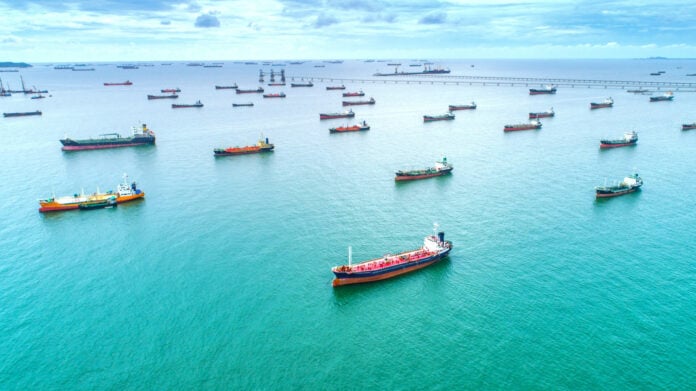
The tanker market enters 2026 with a high degree of uncertainty. Sanctions on Russian and Iranian oil, cargo diversions and port delays have boosted revenues, especially in crude tankers. However, SSY warnεδ of a significant increase in supply, as increased VLCC and Suezmax deliveries are expected in 2026.
In product tankers, the picture is more fragile: the orderbook is the highest in decades, which may put pressure on rates, especially if there is a partial normalization of sea routes.
LNG, LPG, chemicals
Special mention is made of the LNG sector. Although the end of 2025 was marked by an explosive increase in freight rates, SSY described 2026 as a high-risk year, due to the large entry of new ships in relation to the limited increase in LNG production. At the same time, the Signal Group report underlined that market psychology can change quickly, creating intense volatility.
Correspondingly, in LPG carriers and chemical tankers, the main challenge remains the oversupply of ships combined with moderate demand growth. These markets are based more on distortions and inefficiencies than on strong fundamentals.
Year of Decisions
The next year will require increased strategic alertness. Fleet management, investment discipline and understanding of geopolitical risks will be decisive for profitability.
Essentially, the new year begins with fewer surprises, but not with fewer risks. As it is pointed out, geopolitics does not disappear, it simply becomes more “silent” and more structural, while sanctions, strategic competitions and security issues remain in the background.
In this context and in a world where instability has become permanent, shipping is called upon not only to adapt, but to operate with the logic of “permanent crisis”. 2026, more than ever, will distinguish those who can correctly read market signals from those who rely on the recipes of the past.
Για να εμφανίζονται περισσότερα άρθρα της Ναυτεμπορικής στις αναζητήσεις σας εύκολα και γρήγορα, πρέπει να προσθέσετε το site στις προτιμώμενες πηγές σας. Μπορείτε να το κάνετε πηγαίνοντας εδώ.