
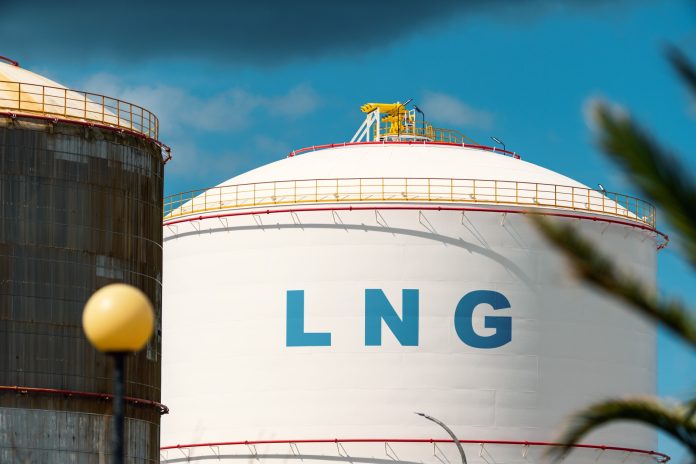
Greece’s reliance on LNG deepened in the first half of 2026, increasing its exposure to volatility in global gas markets, as liquefied natural gas accounted for 64.2% of net gas imports used for domestic consumption, up from about 45% a year earlier.
The shift is significant for supply costs because, according to market participants, LNG cargoes are priced entirely off the spot market, using the previous month’s average Dutch TTF benchmark, rather than under long-term contracts, leaving prices more vulnerable to geopolitical disruptions.
According to data from Greece’s gas transmission operator DESFA, analysed by think tank The Green Tank, total net gas imports used for domestic consumption stood at 34.4 terawatt hours (TWh) in January-June, down 0.9% from a year earlier.
However, the supply mix changed markedly. LNG imports through the Agia Triada terminal at Revithoussa and the Amfitriti floating storage and regasification unit (FSRU) at Alexandroupolis rose to 22.07 TWh, a record high for the first half and 40.8% above the same period in 2025.
By contrast, net imports through the Sidirokastro entry point, the main gateway for Russian pipeline gas, fell 40.7% year-on-year to 8.2 TWh. Imports through Nea Mesimvria, where Azerbaijani gas enters Greece via the TAP pipeline, declined 4.8% to 5.2 TWh, the lowest first-half level in the past three years.

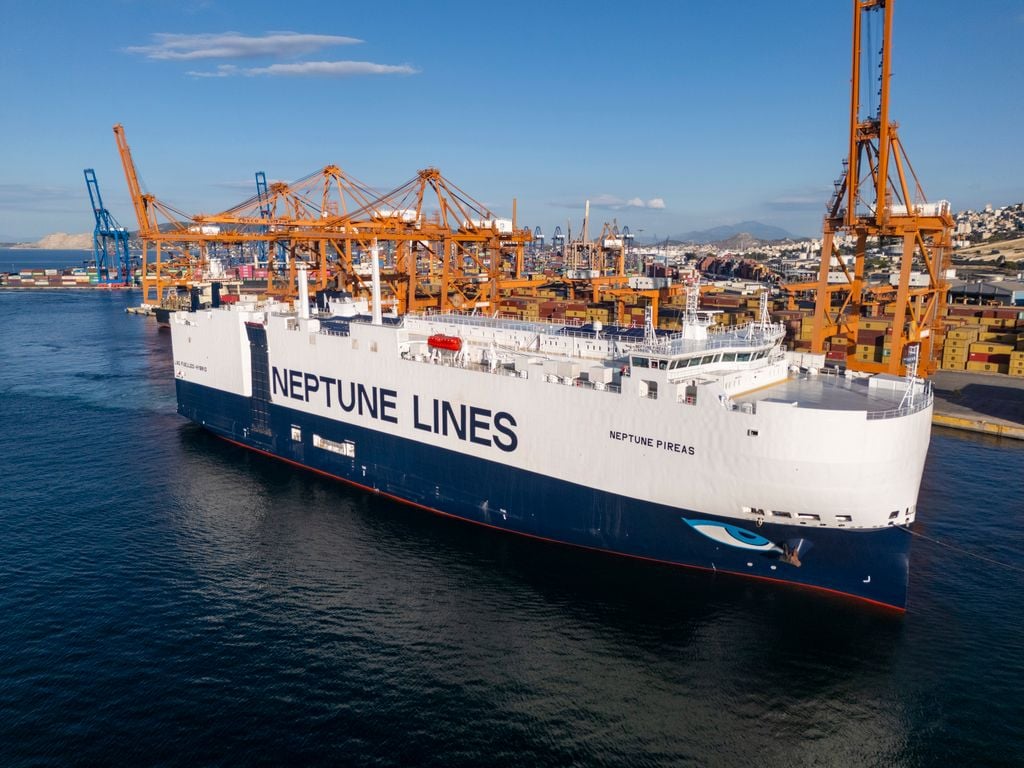
At Revithoussa, the United States remained Greece’s largest LNG supplier, accounting for about 70% of volumes, followed by Nigeria with roughly 23%. Egypt ranked third with around 2.8%, followed by Algeria with 2.7% and Mauritania with 1.9%.
The shift in the import mix towards LNG is estimated to have increased the net fuel cost for domestic consumption by about 79 million euros, or 11.5%, compared with the first half of 2025.
The estimate is based on monthly LNG volumes used for domestic consumption, as calculated from Green Tank data, and the previous month’s average Dutch TTF gas price, with monthly values aggregated over the six-month period.
Under this methodology, the value of LNG supplied to the domestic market is estimated at about 770 million euros in the first half of 2026, up from around 690 million euros a year earlier. The estimate excludes any premiums or discounts to the benchmark price, shipping costs, regasification fees, infrastructure charges and other commercial terms.
Για να εμφανίζονται περισσότερα άρθρα της Ναυτεμπορικής στις αναζητήσεις σας εύκολα και γρήγορα, πρέπει να προσθέσετε το site στις προτιμώμενες πηγές σας. Μπορείτε να το κάνετε πηγαίνοντας εδώ.