
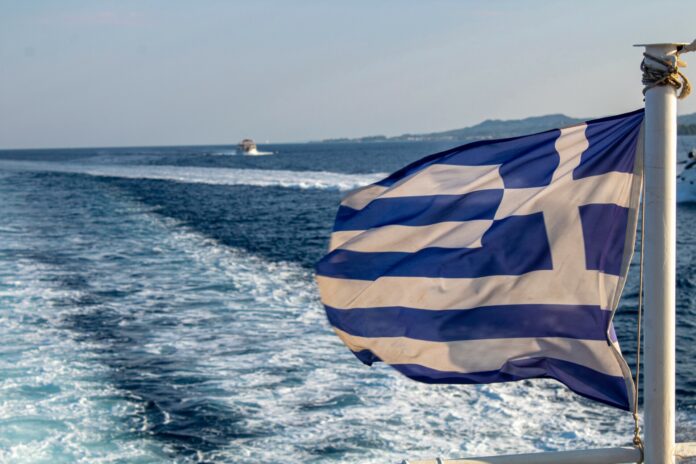
Greek shipowners are stepping up investment in dry bulk carriers, following their dominance in the tanker market, where they control 26% of global fleet capacity and 28% of vessels on order.
New bulk carrier ordering activity by Greek owners surged to 69 vessels in the first half of 2026 from just 12 in the same period a year earlier. According to data from Xclusiv Shipbrokers, the orders accounted for about 24% of all new dry bulk vessel orders placed globally during the period.
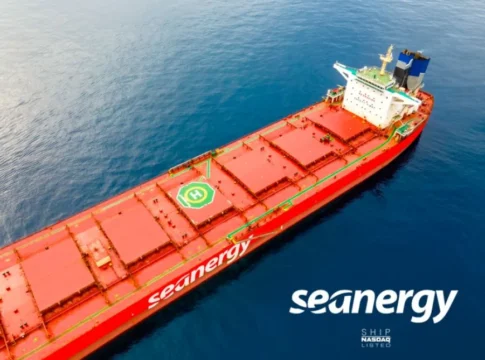
Greek owners ordered 23 Kamsarmax, 22 Capesize, 12 Ultramax and 12 Newcastlemax vessels, underscoring a clear preference for larger ships with greater commercial liquidity.
Overall, Xclusiv said the figures show that Greek shipowners are not merely following market trends but are actively shaping the next phase of global dry bulk fleet renewal. Deliveries to Greek interests also rose sharply, increasing to 76 vessels in 2026 from 20 a year earlier, representing nearly 25% of all dry bulk vessel deliveries so far this year.
Their delivery programme is concentrated primarily in the Kamsarmax and Ultramax segments, with 47 and 18 vessels, respectively.


At the same time, according to the Breakwave Dry Bulk Shipping Report, the outlook for the dry bulk sector remains positive.
The report noted that recent years have been marked by heightened geopolitical uncertainty.
It expects similar events to continue affecting global trade, with a meaningful impact on the effective supply of vessels.
Combined with the prospect of a multi-year cyclical recovery in the Chinese economy following recent economic turbulence, the dry bulk market is expected to remain highly volatile, supported by steady demand for bulk commodities and relatively restrained growth in the global fleet.
New orders
The global dry bulk orderbook expanded significantly in the first half of 2026, highlighting continued investment in fleet renewal despite uncertainty surrounding future marine fuels, shipbuilding costs and the long-term demand outlook.
According to Xclusiv, the orderbook stood at 1,642 dry bulk vessels in the January-June period, compared with an active fleet of 14,908 ships, resulting in an orderbook-to-fleet ratio of 11%.
In the same period of 2025, the orderbook totaled 1,363 vessels against a fleet of 14,360 ships, corresponding to an orderbook-to-fleet ratio of 9.5%.
In other words, while the active fleet expanded by about 3.8% year-on-year, the orderbook grew by more than 20%, signalling a marked acceleration in new ordering activity.
The composition of the orderbook continues to be dominated by geared and medium-sized vessels.
Ultramax vessels remain the largest segment, with 505 ships on order and an orderbook-to-fleet ratio of 27.9%, up slightly from 25.9% in 2025.
They are followed by Kamsarmax vessels, with 349 ships on order, although their orderbook-to-fleet ratio declined to 19.3% in 2026 from 22.8% a year earlier.
Handysize vessels continue to account for a significant share of future fleet supply, with 272 ships on order and a stable orderbook-to-fleet ratio of around 9%.
The sharpest increase, however, was recorded in the Newcastlemax segment, where the orderbook nearly doubled to 178 vessels in 2026 from 94 a year earlier, lifting the orderbook-to-fleet ratio to 34.2% from 18.8%.
Newbuilding deliveries also increased in 2026. Between January and the end of June, a total of 310 new dry bulk vessels were delivered, compared with 266 in the same period of 2025, an increase of 16.5%.
New ordering activity sent an even stronger signal. By the end of June 2026, a total of 285 dry bulk vessels had been ordered, compared with 172 in the corresponding period of 2025, representing an increase of nearly 66%.
The figures indicate that shipowners are not only replacing ageing tonnage but are also positioning strategically in vessel segments where they expect stronger long-term utilisation and greater commercial liquidity.
Για να εμφανίζονται περισσότερα άρθρα της Ναυτεμπορικής στις αναζητήσεις σας εύκολα και γρήγορα, πρέπει να προσθέσετε το site στις προτιμώμενες πηγές σας. Μπορείτε να το κάνετε πηγαίνοντας εδώ.