

Time is running out before the war in Iran begins to have serious knock‑on effects on the global economy and shipping markets.
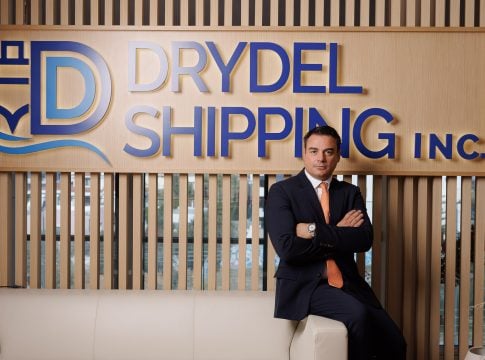
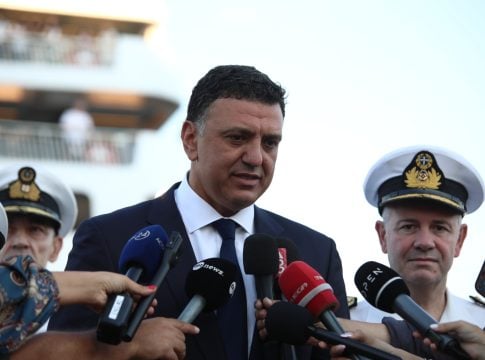
Haris Vafias, who was named EY “Entrepreneur of the Year” for 2025, stated during a press conference: “The war has already had an impact on inflation, fuel prices, and the cost of goods on supermarket shelves, while consumers are beginning to feel the strain. Let us hope it does not last more than two to three months.”
Commenting on record-high freight rates for voyages from the Persian Gulf to Asia, he noted that such levels are “only for the very bold.” His group currently operates a fleet of 93 vessels—including tankers, bulk carriers, and LPG carriers—with an additional 12 ships under construction.
As Vafias underlined, “the war in Iran has generated very high freight rates for specific vessel segments and in certain regions, but not across shipping as a whole.
For instance, tanker rates were already at elevated levels prior to the outbreak of hostilities in Iran and did not increase further during the conflict. The market was already very strong beforehand.


In dry bulk, by contrast, the market is flat to soft, while LPG carriers have seen some improvement, though not to the levels observed in tankers.”
Downside scenario
Referring to the current peaks, he said: “Freight rates have reached peak levels for those willing to trade to and from the Persian Gulf. This market is only for the very bold.”
However, he cautioned that “if the war continues for more than two months, it will be negative for shipping.”
He explained: “We would likely see refinery shutdowns, reduced output, and higher oil and gasoline prices. Continued attacks would further drive up insurance costs, making operations in the Strait of Hormuz commercially unviable. Crews may be unwilling to sail in the area or may demand excessive compensation. Overall, the outlook would deteriorate if the conflict persists for two more months.”
Responding to a question on the performance of listed shipping stocks on US exchanges—which have not reflected the strong freight market—he stated: “This is puzzling. Share prices across the sector, including tanker companies, are declining.
Investors may be focusing on the medium-term outlook rather than short-term gains, effectively discounting the temporary spike in freight rates.
Deleveraging strategy
Describing the nature of the shipping industry, Vafias highlighted its inherently high-risk profile, given the capital-intensive nature of asset investments.
He also acknowledged the inevitability of mistakes: “In shipping, it is impossible not to make mistakes. No company gets every decision right. What matters is ensuring that the right decisions outweigh the wrong ones.”
Regarding his group, he noted that recent developments have led to a more conservative financial approach, particularly in relation to leverage. “We have repaid all our debt—1.1 billion dollars over the past three years—and currently operate with no bank borrowing.”
He added, however, that this outcome was largely opportunistic, driven by exceptionally strong freight markets. “Five years ago, we could not have imagined operating fleets of this scale without bank financing.”
Call for faster justice system
Asked what he would change as an entrepreneur, Vafias pointed to the need for a more efficient judicial system, particularly in terms of speed. He clarified, however, that this does not directly affect ocean-going shipping, which operates under English law.
Για να εμφανίζονται περισσότερα άρθρα της Ναυτεμπορικής στις αναζητήσεις σας εύκολα και γρήγορα, πρέπει να προσθέσετε το site στις προτιμώμενες πηγές σας. Μπορείτε να το κάνετε πηγαίνοντας εδώ.