
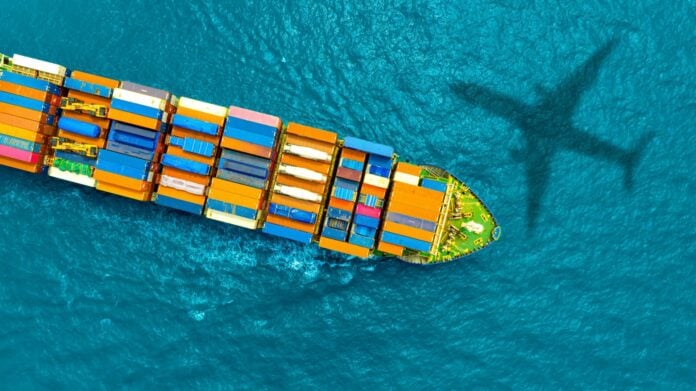
Greek-owned shipping is at the top of the world with 5,691 ships, confirming its leading role in global maritime trade, in a period of increased uncertainty and ongoing challenges.
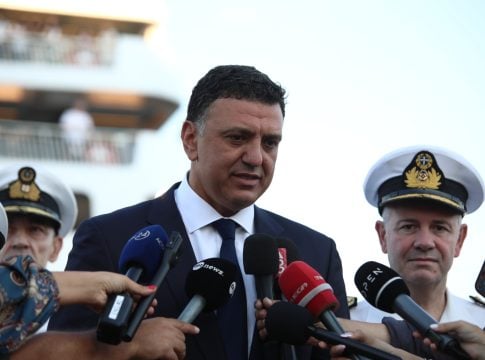
As the president of the Union of Greek Shipowners’ Association, Melina Travlou, emphasized, “the vital role of shipping for the stability of the global ecosystem presupposes the free and safe passage of ships, seafarers and goods, as a global responsibility”, reflecting the role of Greek shipping not only as an economic power, but also as a foundation of international stability.
The Greek-owned fleet represents approximately 20% of the world’s tonnage in deadweight (dwt) terms, making Greece the largest shipping power internationally.
The dominance of Greek shipping is clearly reflected in the composition of the fleet, which covers all the main types of ships.
In dry bulk transport, the Greek-owned fleet numbers 2,685 ships, representing approximately 24.9% of global tonnage, while the presence in tankers is also strong, with 887 ships and a share of approximately 29.2%, ranking Greece at the top of energy maritime transport.


In chemicals and petroleum products, the fleet has 526 ships (15.4% of global tonnage), while the presence in LNG is particularly dynamic, with 169 ships and a share of approximately 24.5%, highlighting the role of Greek shipping in the energy transition.
The Greek-owned fleet numbers 153 LPG ships (11%), 528 container ships (8.1%), while in vehicle carriers 72 ships are recorded, with a share of approximately 8.2%, completing the multidimensional footprint of Greek shipping.
Για να εμφανίζονται περισσότερα άρθρα της Ναυτεμπορικής στις αναζητήσεις σας εύκολα και γρήγορα, πρέπει να προσθέσετε το site στις προτιμώμενες πηγές σας. Μπορείτε να το κάνετε πηγαίνοντας εδώ.