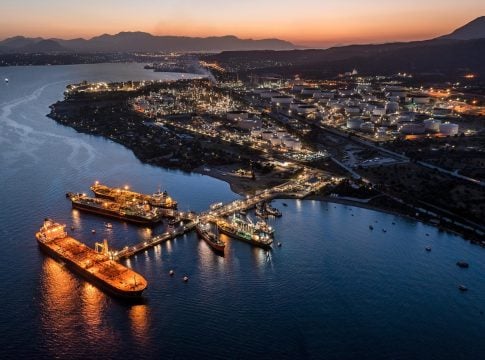

In a period of rearrangement of international cargo flows, Piraeus is once again emerging as a hub of global trade, as the gradual normalization of the Suez Canal creates strong prospects for the return of cargo and the strengthening of its transit flows.
With one of the five strongest container terminals in Europe and consistently high interconnectivity, the port of Piraeus remains the main core of a rapidly evolving logistics, shipbuilding and international cargo handling cluster.
The additional investments being promoted in the Greek port system – including the upgrade of the Elefsis shipyards into a modern port hub – further strengthen the country’s supply chain, operating complementary to Piraeus.
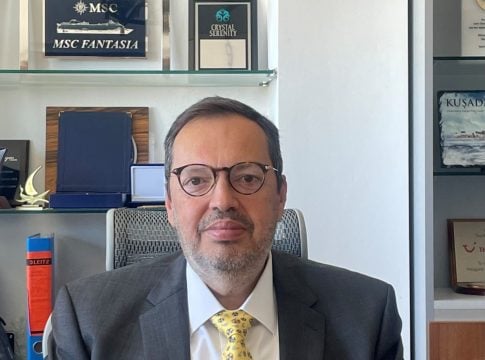
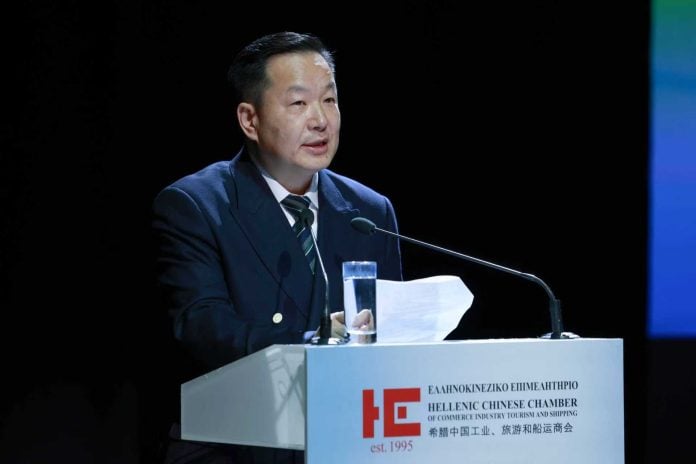
The president of PPA S.A., Han Chao, spoke to “N” about the expected recovery in volumes, the strategic investments that strengthen the role of Piraeus in the Mediterranean, the Greece-China relationship and the new prospects for synergies that are emerging.
“The Container Terminal has risen and remains among the top 5 ports in Europe and the 50 largest in the world,” he emphasized, noting that in the coming years, a gradual and substantial recovery in volumes will begin to be recorded, especially in mega container vessels.

He also noted that despite the intense geopolitical turmoil, cooperation in terms of mutual benefit remains the dominant trend of the era, opening new paths of development for both China and Greece.
“The port of Piraeus is a practical example of this perspective, proving that strategic foreign investments can strengthen the economy, employment and international position of the country,” Han Chao noted.
The full interview follows:
With the gradual normalization of the Suez Canal, do you estimate that Piraeus will recover the lost cargo? When do you foresee a substantial increase in volumes and how is PPA preparing?
“The geographical location of Piraeus, in close proximity to the Suez Canal, has historically been one of our greatest strategic advantages.
The gradual restoration of normality in transits is expected to allow the progressive restoration of significant cargo volumes, as major shipping companies re-adjust their itineraries to the traditional Asia – Europe lines.
Despite the international turmoil of recent years, the long-term image of the port of Piraeus remains extremely strong: The Container Terminal has risen and remains among the top 5 ports in Europe and among the 50 largest in the world. Even in the period 2023-2024, where international crises led to temporary route redirections, the decline in Piraeus was limited – a fact that proves its long-term and sustainable competitiveness.
Based on these data, we estimate that from the coming years a substantial recovery in volumes will gradually begin to be recorded, especially in mega container vessels serving the Asia-Europe route.
PPA is already preparing with targeted investments in infrastructure, equipment and operational efficiency, in order to fully utilize the normalization of the international environment and enhance the attractiveness of Piraeus as a key transit hub.
Following the completion of the Car Terminal and the upcoming underground road connection with the former ODDY, what benefits do you expect in terms of cargo flow and the competitiveness of the port?
“The expansion of the Car Terminal and the creation of the underground road connection with the former ODDY are critical interventions that safeguard the competitiveness of the port of Piraeus.
With the new infrastructure, the port essentially strengthens its role as a specialized hub for the entire Southeast Mediterranean. The connection will significantly improve the flow of cargo, reducing transport times, decongesting the road network and allowing for more efficient management of import, export and transhipment flows.
Furthermore, it will create prospects for intermodal connectivity to continental Europe, enhancing the possibilities for modern logistics services and the provision of added value, tailored to the needs of companies.”
What services do you aim to upgrade in order to strengthen the competitiveness of the Perama Ship Repair Zone?
“With consistency and commitment to our vision, we are proceeding with the planning and the required upgrades, with the aim of the Ship Repair Zone acquiring modern infrastructure that meets the needs of the international ship repair industry.
Projects are already being implemented, such as the upgrade of power supplies for repair work, as well as the renewal of critical equipment – including the new cranes that have already been installed.
As an infrastructure manager, Piraeus Port Authority does not directly provide repair services. However, our investments create a more reliable, functional and modern environment for local businesses and employees of the Zone, essentially strengthening the position of the port of Piraeus as an international ship repair center.”
Is COSCO SHIPPING interested in new investments in logistics and the railway interconnection of Piraeus? In what direction is the investment plan moving?
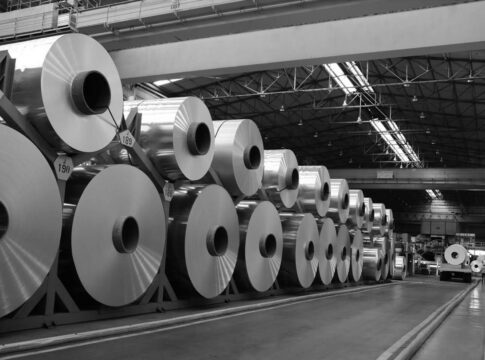
“A new infrastructure plan, worth over 50 million euros, which will further strengthen the logistics cluster of Piraeus, is already in the planning stage.
These investments aim both at the complete renovation of existing facilities and at the creation of new infrastructure and services that will strengthen the supply chain.
The central axis is the development of value-added services, such as customized logistics solutions, which will transform the port of Piraeus into an integrated product management hub.
Interventions are also being examined that will strengthen the railway interconnection, enhancing intermodality and the flow of cargo to Central and Eastern Europe.”
In view of the mandatory use of OPS from 2030-2035, where is the PPA in terms of developing the necessary energy infrastructure and what is the compliance timetable?
“The company remains fully committed to complying with the EU objectives and timetables, implementing strict environmental standards and gradually progressing in the development of the necessary infrastructure and services that will support the green transition of the port, enhancing its competitiveness and sustainability.
PPA has completed all the necessary technical and operational studies, including the EALING and CIPORT programs.
The plan foresees the creation of five OPS berths for the ferry terminal and four for the cruise, while the new cruise pier will be delivered fully ready for connection to the OPS systems.
At the same time, we recognize that the transition to cold ironing systems constitutes a significant challenge for all Mediterranean ports without exception, mainly due to the extremely high energy requirements of modern ships.
The main issue that remains pending concerns the provision of the required electrical power, a requirement that also requires more comprehensive planning by third parties.
Given that international operators bring with them capital, a stable customer base and global networking, how does Piraeus intend to maintain its strategic hub position in the face of increasing competition from other Mediterranean and European ports? Are new strategic partnerships or an adjustment of the investment model required?
“The port of Piraeus holds a strong strategic position in the Mediterranean, the Adriatic and the Black Sea, constituting a key corridor for international trade between Asia and Europe.
Piraeus S.A., with one of the largest shipping companies in the world as its main shareholder and a member of the Ocean Alliance, ensures a stable flow of cargo, high connectivity and global networking, which make Piraeus one of the most reliable and competitive ports in the region.
At the same time, PPA maintains strong partnerships with leading shipping companies in all port activities – from containers and cruises to logistics services.
The great depths, favorable weather conditions, modern infrastructure and our green transition strategy constitute distinct and competitive advantages of the port of Piraeus, which maintain its role as a strategic hub.
Our priority remains the continuous upgrade of the quality of services, the targeted expansion of investments and the exploitation of strategic partnerships that create added value.
Based on this approach, the port of Piraeus continues to emerge as a leading transit hub, capable of dynamically responding to the challenges and increasing competition in the region.”
How do you assess the current relationship between Greece and China on an economic and social level? Do you believe that cooperation can be affected by broader geopolitical developments? And, if so, how is the PPA preparing for such challenges?
“The current international reality remains complex and unstable, affecting economic globalization and the development path of all countries.
However, we firmly believe that humanity is a community with a common future and that cooperation in terms of mutual benefit continues to be the main trend of our time and the path to future development for both China and Greece.
The port of Piraeus is a typical example of a successful, mutually beneficial cooperation between the two countries.
It is a model that highlights how foreign investment can support employment, strengthen the economy and upgrade Greece’s role as an international trade hub.
In this context, Piraeus Port Authority S.A. is accelerating its development in two key areas: digital transformation and green growth.
We are also focusing on three strategic priorities: first, exploring financing opportunities and leveraging financial tools for listed companies, second, strengthening Piraeus’ position as an international cargo hub, and third, accelerating the creation of a modern logistics center that will further upgrade the supply chain.
At the same time, it remains committed to corporate social responsibility, substantially contributing to the economic development, social progress and prosperity of Greek society.
Based on this strategy, Piraeus continues to strengthen its role as a world-class port, capable of responding to the challenges and opportunities of the international environment.”
Για να εμφανίζονται περισσότερα άρθρα της Ναυτεμπορικής στις αναζητήσεις σας εύκολα και γρήγορα, πρέπει να προσθέσετε το site στις προτιμώμενες πηγές σας. Μπορείτε να το κάνετε πηγαίνοντας εδώ.