
Europe and the Group of Seven (G7) are stepping up efforts to secure supplies of critical raw materials through new policy initiatives, investment programmes and closer international cooperation aimed at reducing dependence on dominant suppliers of strategic minerals.
The European Union is moving ahead with the creation of the European Critical Raw Materials Centre, following the adoption of the Critical Raw Materials Act (CRM Act) and the RESourceEU Action Plan.
At the same time, the G7 has launched a new G7 Platform for Critical Minerals Cooperation, establishing permanent cooperation between the OECD and the International Energy Agency (IEA). The initiative sets a target of reducing dependence on any single supplier of rare earth elements to below 60% by 2030 while encouraging investment in mining, recycling and the recovery of secondary raw materials.
Financing – Investment
Around 195 projects across critical minerals value chains involving G7 members and partner countries have already been announced since the start of 2026, representing investments of more than 64 billion euros.
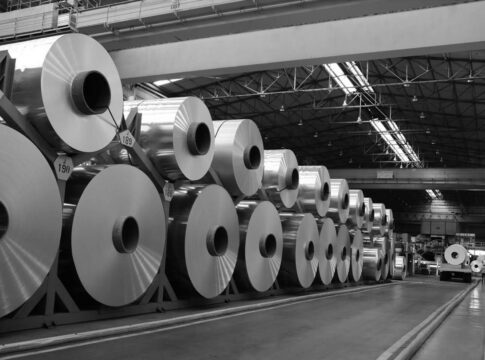
In Europe, the first round of Strategic Projects under the CRM Act approved 47 projects across 13 member states, attracting total investments of 22.5 billion euros. Greek industrial group METLEN’s gallium production investment is among the flagship projects and is expected to cover nearly all of Europe’s gallium requirements.


The second call for CRM Act Strategic Projects has attracted more than 160 applications, demonstrating sustained industry interest. Final selections are expected in autumn 2026.
Greece has submitted five applications from mining companies covering copper, germanium and raw material recycling projects, including developments at existing deposits and selected state-owned mining areas. The country also met its first-year reporting obligations under the CRM Act by submitting its implementation report to the European Commission in May 2026.
Beyond the CRM Act, the RESourceEU initiative is expected to mobilise around 3 billion euros through various EU funding instruments, including a 1.8-billion-euro Battery Booster programme for battery materials and a 1-billion-euro Innovation Fund for clean technologies.
The European Union is also supporting research through Horizon Europe, developing a demand-supply matching platform for critical minerals projects and establishing the European Minerals Investment Network (E-MIN), a permanent platform bringing together public and private investors, industrial companies and project developers.
Several EU member states have also launched dedicated financing vehicles for critical minerals projects, including France, Germany, Italy and the Netherlands.
Greek interest
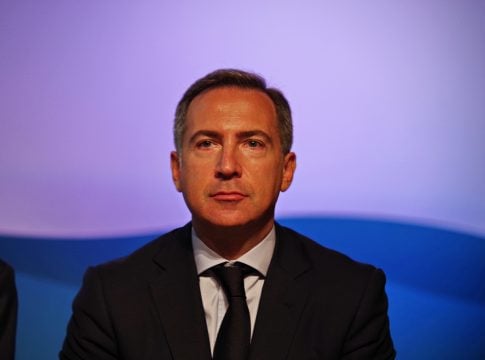
Petros Tzeferis, director general for mineral raw materials at Greece’s energy ministry, said the latest European initiatives and the G7 declaration signalled that the next phase of international critical minerals policy would focus on quantified diversification targets, data-driven early warning systems and internationally coordinated stockpiling.
For countries such as Greece, which is pursuing both mining investments and projects under the CRM Act, the evolving framework will be particularly important, especially regarding participation criteria for non-G7 countries and the role of southeastern Europe in future OECD-IEA assessments, he said.
Economic geologist Nikolaos Arvanitidis said Greece’s geological resources and mineral potential positioned the country as an important pillar of Europe’s strategy to strengthen supplies of critical raw materials.
Για να εμφανίζονται περισσότερα άρθρα της Ναυτεμπορικής στις αναζητήσεις σας εύκολα και γρήγορα, πρέπει να προσθέσετε το site στις προτιμώμενες πηγές σας. Μπορείτε να το κάνετε πηγαίνοντας εδώ.