
The Sino-American dispute over control of trade and energy flows is being transferred to Greek territory, highlighting the geostrategic importance of our country.
At a time when everything indicated that the trade confrontation between the two dominant economies of the planet had subsided, the major agreements of the Americans in Greece, as well as the first statements of the new US ambassador to Athens, Kimberly Guilfoyle, rekindled the tension between the US and China.
One day after the announcement of the Elefsis project, where the Americans seek to open their own commercial and energy corridor to Central and Eastern Europe, the Chinese embassy responded yesterday to what Ms. Guilfoyle had stated, when in a recent interview (on ANT1) she described the Chinese investment in the port of Piraeus as an “unfortunate” event.
The Chinese embassy spoke of “baseless attacks against the investment and operation of the port of Piraeus.”
Respect for agreements
Foreign Ministry spokeswoman Lana Zochiou said in a statement on Tuesday: “The Prime Minister himself has stated this several times, that the port of Piraeus, 67% of the port, was given to the Chinese during the fiscal crisis in Greece and they were the only ones who submitted an offer. There is no question of aligning with the US as a strategic partner on issues related to the protection of our common interests.”

“Greece respects the agreements signed in the past, so I don’t think I have anything more to say on this.”
Asked if Athens is encouraging US interest in investing in other ports as a compensation, the Greek Foreign Ministry replied: “As for investment issues, it is obvious that Athens is open, but it is not within our competence.”
“Key” to freight and energy flows
Greece’s position on the map is considered of strategic importance both for global sea trade and for Europe’s energy security.
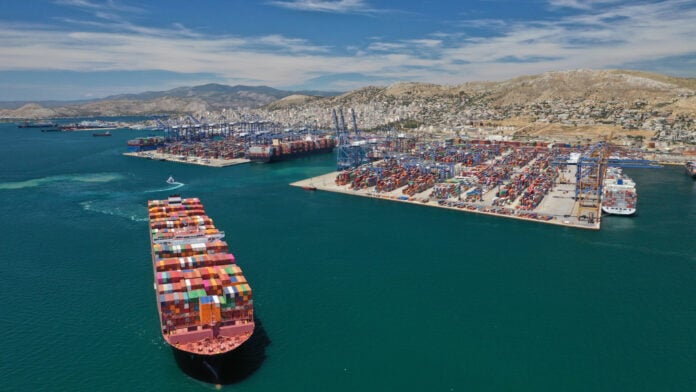
The Chinese were the first to recognize the potential of our country, who wanted to open the commercial “gates” of Europe. They chose the most strategic port, the Piraeus port, and gained share control in 2016. It is worth noting that they entered the PPA Container Terminal at the end of the first decade of the 2000s.
During this time, they have invested over 1.5 billion dollars. And they have succeeded in making the large port one of the five largest in Europe and the largest in the Mediterranean in terms of container traffic. Boxes that transport consumer goods produced mainly by China to European markets. However, in China’s biggest request regarding the port of Piraeus, namely the further development of the Container Terminal with a new pier, Greek governments have “frozen” developments for the past five years.
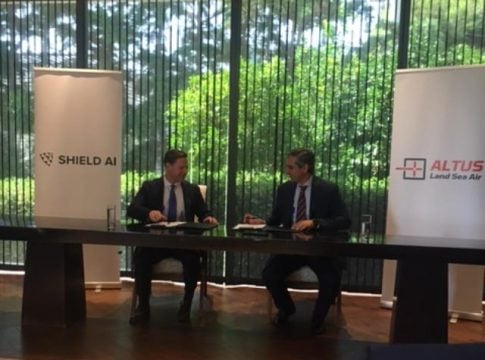
On the other hand, the war in Ukraine and European sanctions on Russia, mainly in the energy sector, gave the US the opportunity to expand energy relations with Europe, choosing to make Greece a hub. These decisions triggered other needs, such as the development of port facilities that will be under US control. The place that was chosen in the first phase is a few kilometers away from Piraeus, the ONEX facilities, at the Elefsis shipyards, while the plans include a logistics center and a connection with the Thriasio freight center. As for the ships that Elefsis will serve, when it is ready, they will mainly concern bulk carriers, some containerships, while investments will also be made for liquefied natural gas. And as Ambassador Guilfoyle has stated, other similar agreements for investments are expected to be made.
In relation to possible US investments in Greek ports, the Minister of Maritime Affairs and Insular Policy Vasilis Kikilias has stated that discussions are already underway after his trip to Washington. The focus is on ports with direct access to an airport and railway, such as Elefsis.
Για να εμφανίζονται περισσότερα άρθρα της Ναυτεμπορικής στις αναζητήσεις σας εύκολα και γρήγορα, πρέπει να προσθέσετε το site στις προτιμώμενες πηγές σας. Μπορείτε να το κάνετε πηγαίνοντας εδώ.