
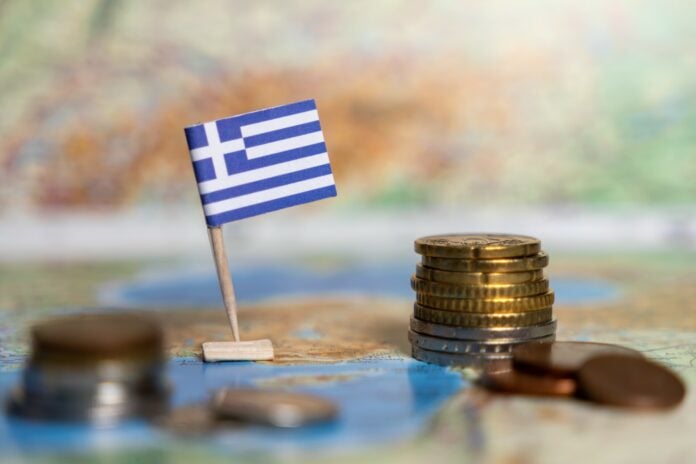
The absorption of resources from the European Union’s Recovery and Resilience Facility (RRF) will be critical for maintaining Greece’s strong growth momentum, according to the spring report of the Hellenic Fiscal Council (HFC).
Based on recommendations from international organizations, the report stressed that Greece should focus in the coming years on continuing structural reforms that strengthen competition, foster innovation and improve the utilization of available human resources and capital.
The HFC considers the forecast for economic growth of 1.9% this year realistic, citing continued strong investment momentum and the ongoing deployment of European funding. Growth is also expected to be supported by resilient private consumption, driven by higher employment and rising disposable incomes.
Despite a slowdown in economic activity, the Greek economy is expected to continue expanding at a significantly faster pace than the eurozone average.
For the 2026-2029 period, despite geopolitical tensions and uncertainty weighing on the global environment, Greece’s economy is projected to grow at an average annual rate of 1.8%, supported by investments linked to the RRF and private consumption. However, the report noted that the contribution of investment is expected to decline after the completion of the recovery programme.

Investment and Consumption Drive Growth
According to the spring report, the main growth drivers for the Greek economy this year are the positive momentum of investment and private consumption.
“The outlook is strengthened by the tax relief measures introduced through the recent tax reform, which boost household purchasing power and allow for higher consumption,” the report said, while also highlighting the continued importance of Recovery Fund resources and favourable labour market conditions.
More specifically, the Fiscal Council estimates that:
- Private consumption is expected to maintain its growth trajectory, rising by 1.5% in 2026. Given that private consumption has the largest positive contribution to overall economic growth, this trend may help explain recent upward revisions to growth forecasts.
- Public consumption is projected to increase by 1.1% this year, mainly due to fiscal measures already announced.
- Gross fixed capital formation is forecast to rise by 7.1% this year. Investment in fixed capital remains particularly important, as it strengthens Greece’s long-term productive capacity.
The report emphasized that sustaining investment flows and effectively utilizing European funds will be essential for ensuring that Greece’s current growth cycle translates into lasting improvements in productivity and competitiveness.
Για να εμφανίζονται περισσότερα άρθρα της Ναυτεμπορικής στις αναζητήσεις σας εύκολα και γρήγορα, πρέπει να προσθέσετε το site στις προτιμώμενες πηγές σας. Μπορείτε να το κάνετε πηγαίνοντας εδώ.