

Elissaios Sarmas, Senior Researcher at the National Technical University of Athens (EPU-NTUA)
Prof. Antonello Monti, Fraunhofer FIT and RWTH Aachen University
Dr. Ricardo Bessa, Senior Researcher at INESC TEC
On the 1st of June the NYT published an interesting contribution from senator Bernie Sanders. This article opened a very important discussion, i.e. ownership of AI algorithms and tools. It was incredibly timely because in the following week the EU put the foundation of an approach that is perfectly in line with the vision proposed by the senator, at least for Europe.
The question posed by Mr. Sanders is particularly relevant when we consider critical infrastructures such as the power grid. There is no question that AI will play a key role in future networks. Power systems are becoming more and more complex systems for the growing presence of active devices such as PV or wind turbines. The large number of distributed assets is posing new challenges and creating the question if classical automation solutions are adequate for the future. At the same time, new loads, such as Heat Pumps, AI Data Centers, and Electric Vehicles, are also adding to the complexity picture.


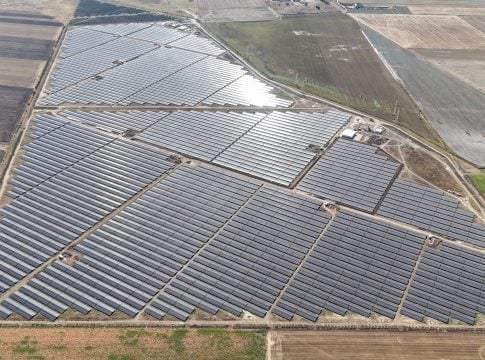
The resulting system is an interconnection of smart devices that are all digital, producing data and then controllable. There is no doubt that in addressing such complexity in a data-rich environment , AI can be an important asset.
This challenge has been clear to the European Commission which has been promoting projects in this area to develop the appropriate basis for the technology within the EU. How to develop foundation models that could help grid operators? Who should own and maintain such models considering the strategic importance of the energy sector?
Currently there are no commercial solutions available and this can be considered an opportunity to develop things in the right direction. The only relevant effort is a global scientific cooperation called GridFM initiated by IBM and Hydroquebeq.
To address such challenge, Europe has a unique structure created by the framework of the Horizon Europe research initiative. Such a large reseach program creates a unique ecosystem of cooperation among research centers and companies that develop together innovation in an open ecosystem. This ecosystem of research is also in continuous exchange with the European Commission and DG Energy in particular. This mechanisms allows a healthy scientific-driven process in which the science community constantly communicates with policy makers.
As part of this exchange, the challenge of developing EU sovereign, appropriate and trustworthy AI models emerged as a sort of emergency. It became clear that was critical to create the conditions for a proper solution before something would emerge from the market creating incovenient situations of competitive advantage in a sector where public interest should prevail.
As result, DG Energy of the European Commission launched an open and transparent request to the research community asking how the challenge could be addressed properly and in short time.
The three authors of this note (Elissaios Sarmas-NTUA, Ricardo Bessa-INESC TEC, Antonello Monti-Fraunhofer FIT) reacted to this request and compiled a plan to address the problem and sent it to the European Commission. This plan was written having in mind some key elements:
– The process must be open and transparent to make sure that all the grid operators in Europe can benefit
– The development must be based on an open source approach to make sure that every action is transparent and then acceptable for the grid operators
– The development is possible only if Europe joins forces and all the stakeholders (research centers, grid operators, manufacturers) contribute to the development to speed up the solution
Following a workshop in Brussels organized by the European Commission in cooperation with Fraunhofer FIT, more than 100 stakeholders decided to support the idea and agreed on some key points:
– The idea to work and cooperate together was accepted as only way to reach the goal
– An open research association, CRESYM, was tasked with the goal to facilitate the process working closely with the European Commisssion.
The main role of CRESYM is to create a legal structure and supervise the activities. The risk in creating these large cooperation networks is to receive a positive feedback in terms of interest but not a real committment. It is then critical to define a contract that binds the partners in delivering resources (workforce, data or simply money) to make sure the project has what it takes to reach the ambitious targets. In a nutshell, governance is key to make sure the project is able to deliver.
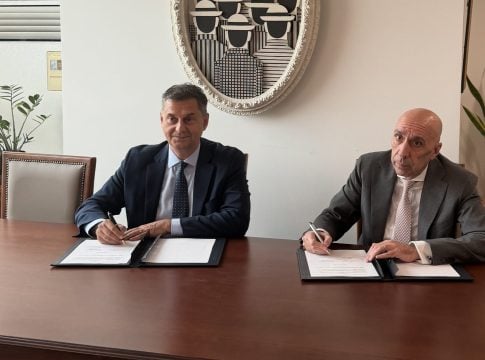
With an incredible effort Mr. Sebastien Lepy, General Manager of CRESYM with the support of a lawyer, Raluca David, drafted the legal terms of this operation. On the 3rd of June the European Commissioned organized a key event following the publication of its Strategic Roadmap for digitalisation and AI in energy: the official signature in Brussels of the project agreement prepared by CRESYM. 48 entities in Europe are now committed to this bottom-up effort boundby a clear legal contract. The aim remains the development and deployment of pan-European sovereign AI models for the management of energy grids.
The process is still open and the group is willing and will accept also new partners in the project. New rounds of signatures will be opened during 2026 with the purpose to increase the size and the impact of this effort now labelled “AI.Grids”.
At the beginning of 2027 the first Minimum Value Product will be released and made available to the partners. The software will be open source and accessible to all partners with a specific focus on grid operators. This approach also aims to reduce adaptation costs and boost interoperability within the national networks of the 27 EU Member States.
In parallel, the European Commission, in cooperation with the partners of the project, will continue building a strong governance in line with its long-term vision: ensure the benefits of data-driven energy systems innovation can manifest themselves and remain accessible across the entire European grid.
This story shows that the vision of Bernie Sanders is possible and it is actually a reality in Europe where public fundings together with private investments are working for the common good, i.e. the reliability of the European Grid with the support and the supervision of the legislator, the European Commission.
While Europe has been somehow lagging in commercial exploitation of AI application, it is taking a clear, open, and a democratic approach to the application of AI in critical energy infrastructures. This is a fantastic example of cooperation of science and policy that will bring unique value to the European society.
Για να εμφανίζονται περισσότερα άρθρα της Ναυτεμπορικής στις αναζητήσεις σας εύκολα και γρήγορα, πρέπει να προσθέσετε το site στις προτιμώμενες πηγές σας. Μπορείτε να το κάνετε πηγαίνοντας εδώ.