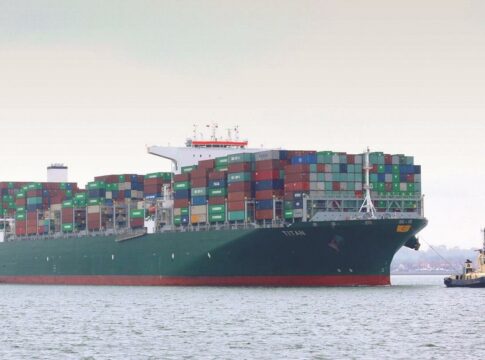

Revenue generated from the implementation of the EU’s FuelEU Maritime regulation will be channelled into financing the green transition of Greece’s shipping sector and port infrastructure.
The provision is included in a draft bill by the Ministry of Development that was released for public consultation on Thursday and will remain open until June 29, 2026. Under the proposal, proceeds generated through FuelEU Maritime will be allocated to a Green Fund operating under the supervision of the Ministry of Maritime Affairs and Insular Policy.
The fund will support five key financing pillars aimed at accelerating shipping decarbonisation and the development of modern port infrastructure.
Eligible beneficiaries will include shipping companies, port authorities, universities and research centres active in the field of energy transition.
Framework for the use of funds


A key section of the draft legislation concerns the implementation of the FuelEU Maritime Regulation and establishes the framework for the use of revenues collected from penalties imposed for non-compliance with the EU regulation.
Under the proposal, FuelEU revenues will be classified as “green resources” and transferred to the Green Fund through a dedicated account maintained exclusively for the purposes of Regulation (EU) 2023/1805 under the Ministry of Maritime Affairs.
Article 120 of the draft law sets out the priority areas that will receive funding.
According to the provision, the resources collected will be directed towards initiatives supporting the decarbonisation of shipping and the transition of the fleet to cleaner energy sources.
Eligible projects include the promotion of renewable and low-carbon maritime fuels, the development and testing of innovative technologies aimed at reducing greenhouse gas emissions, and the deployment of such technologies across the Greek fleet.
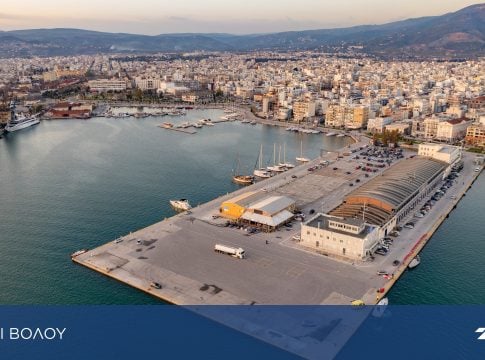
Particular emphasis is also placed on port infrastructure. The legislation provides for the financing of projects involving the construction or upgrading of alternative-fuel bunkering facilities, as well as onshore power supply (OPS) infrastructure at Greek ports.
In addition, the resources may be used to support the installation of technologies that improve vessel energy efficiency and reduce greenhouse gas emissions, as well as the preparation of technical, environmental and economic studies and the provision of specialised advisory and support services.
The draft bill also stipulates that up to 2% of the previous year’s revenues may be allocated to cover the Green Fund’s operating expenses.
For example, if FuelEU penalties generate 10 million euros in a given year, up to 200,000 euros could be used to cover the fund’s administrative and operational costs.
The legislative framework seeks to ensure that revenues generated through FuelEU Maritime penalties are reinvested in the maritime and port sectors, supporting projects and initiatives that contribute to achieving the European Union’s environmental and decarbonisation objectives.
Για να εμφανίζονται περισσότερα άρθρα της Ναυτεμπορικής στις αναζητήσεις σας εύκολα και γρήγορα, πρέπει να προσθέσετε το site στις προτιμώμενες πηγές σας. Μπορείτε να το κάνετε πηγαίνοντας εδώ.