
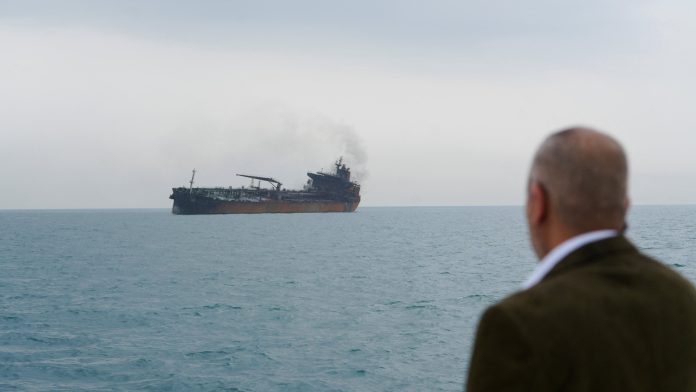
At a time when two of the most critical maritime passages for global navigation—the Strait of Hormuz and the Red Sea—are simultaneously under strain due to the ongoing conflict in the Middle East, the international shipping industry is not merely managing another crisis; it is transitioning into a new operating environment characterized by heightened uncertainty and elevated geopolitical risk exposure.
Trade flows are being rerouted, vessels are opting for longer passages or adopting a wait-and-see stance ahead of high-risk transits, while freight rates, insurance premiums and bunker costs now incorporate a persistent “risk premium” that permeates the entire supply chain. In this context, shipping is effectively moving beyond the notion of “normal operations” and toward a model of continuous adaptation, where risk mitigation, operational flexibility and proactive contingency planning are critical to resilience.
Angelos Lazaridis, Commercial Director at maritime security and risk management firm Diaplous, describes a new reality for global shipping, in which geopolitical instability is no longer treated as an exceptional disruption but as a structural parameter shaping route planning, cost structures and operational risk. As he noted, trade lane dynamics are already shifting in practice, as the concurrent disruption of the Red Sea and the Strait of Hormuz is forcing vessels and operators either to reroute via the Cape of Good Hope or to remain on standby prior to undertaking high-risk transits.
According to Lazaridis, this does not yet constitute a permanent reconfiguration of global trade, but rather a more enduring phase of operational flexibility, where shipping no longer relies on a single “standard” routing pattern, but instead operates across multiple risk-based scenarios.
He pointed out that, despite the cessation of Houthi attacks in the Red Sea since October 2025, weekly vessel transits through the Bab el-Mandeb Strait—previously at pre-crisis levels of 420–450 vessels (both directions combined)—remain down by approximately 50% six months later, at 240–270 vessels.


Emerging cyber and electronic threats
Within this evolving risk landscape, operational threats have become increasingly complex. As he explained, risks are no longer confined to conventional kinetic threats, but now extend to electronic interference, AIS spoofing, signal manipulation and challenges in vessel identification, all of which significantly increase the probability of navigational incidents.
For seafarers, this translates into heightened psychological pressure and increased training requirements, while for operators it entails higher security-related expenditure, stricter voyage risk assessments and enhanced accountability in preventive risk management.
“A simple risk allowance is no longer sufficient,” is the key takeaway of his analysis; rather, there must be tangible assurance that crews are not left exposed in high-risk waters.
Shipping as a transmission channel for inflationary pressures
At the core of this new environment, a structural “geopolitical premium” is taking shape, impacting freight rates, war risk insurance and fuel costs.
According to Lazaridis, this additional cost is not absorbed by a single stakeholder. It is distributed across shipowners, charterers and cargo interests, before ultimately being passed through to product and energy prices, with the end consumer bearing the final burden.
He warned that as long as the market perceives the crisis as temporary, these costs may remain manageable. However, if disruptions are seen as recurring, the premium will shift from being exceptional to becoming embedded in the cost base of global trade.
Particular emphasis is placed on the Strait of Hormuz, which he describes as a critical artery for global oil and LNG flows. Even without a permanent closure, partial disruption—such as loading delays or route avoidance by vessels and underwriters—can trigger significant price shocks in energy markets.
Indicatively, throughout March 2026, only 84 laden tankers exited the Strait of Hormuz—approximately three per day—compared to 20–24 daily departures prior to the conflict. At the same time, no LNG cargoes were recorded exiting the Strait during the entire month, with only a single transit observed in early April.
Delays and cargo diversions, he added, are already impacting global supply chains—initially through higher freight costs and delivery delays, and subsequently through inventory realignment requirements.
The impact is not always immediately visible, as many companies operate under fixed-price contracts and maintain safety stock buffers. However, he cautions that if disruptions persist for weeks rather than days, the pressure will become more evident across retail, industry and ultimately household disposable income.
According to Diaplous’ senior executive, shipping may act as a key transmission mechanism through which geopolitical tensions spill over into the real economy. When elevated transport costs coincide with higher energy prices, they reinforce inflationary pressures and further strain an already fragile global environment.
The longer uncertainty persists in maritime transport, the greater the risk of adverse effects on growth, consumption and investment. Rising inflation also translates into higher operating costs for companies, which, in an effort to offset these pressures, may resort to cost-cutting measures—with potential implications for employment.
Well-shielded but not immune: Greece in a new threat landscape
With regard to Greece, he assessed that the country is relatively better insulated than other economies with higher energy dependence or fewer alternatives, given its diversified sourcing, robust maritime infrastructure and access to the European support framework.
Nevertheless, he does not consider Greece immune. Should international disruption persist, the impact is expected to be felt primarily through pricing pressures rather than through administrative restrictions on fuel consumption.
In other words, the principal risk for Greece is economic rather than related to physical supply constraints.
Lazaridis placed particular emphasis on the evolving nature of maritime threats.
As he noted, drone-based attacks, electronic interference, precision strikes and the deployment of magnetic mines targeting tankers in regions such as the Mediterranean, the Baltic and the Black Sea are now shaping a new form of hybrid warfare at sea.
This does not imply that every vessel faces the same level of exposure; however, it does indicate that the overall threat environment has been qualitatively upgraded—becoming more asymmetric, more agile and less predictable.
Within this context, the shipping industry must decisively move away from a passive, reactive posture toward a rigorously proactive and preventive risk management approach.
Establishing a comprehensive “protective shield” around vessels is no longer a theoretical consideration, but a prerequisite for operational continuity and resilience.
He concluded that those companies that adapt most rapidly to this new environment will be best positioned to maintain a strategic edge and stay ahead of unfolding developments.
Για να εμφανίζονται περισσότερα άρθρα της Ναυτεμπορικής στις αναζητήσεις σας εύκολα και γρήγορα, πρέπει να προσθέσετε το site στις προτιμώμενες πηγές σας. Μπορείτε να το κάνετε πηγαίνοντας εδώ.