
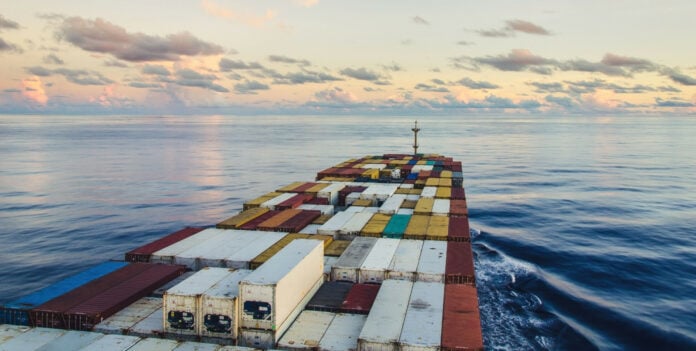
New trade routes, evolving trade patterns and emerging cargo segments are expected to underpin the container shipping sector in 2026 and 2027, with a particular focus on artificial intelligence and AI-related products.
At a time when escalating tensions in the Middle East and broader geopolitical frictions continue to weigh on global trade, the latest report by the World Trade Organization (WTO) highlights that investments in data centers, advanced semiconductors, IT equipment and digital infrastructure are generating new cargo flows. These developments are boosting demand across liner services and providing critical support to the sector.
More broadly, the outlook for 2026—based on WTO data—does not point to a collapse in trade, but rather to a marked slowdown. Following a robust 4.6% increase in global goods trade volumes in 2025, baseline projections for 2026 moderate to 1.9%, before a modest recovery to 2.6% in 2027. In other words, the global economy is not coming to a halt, but is transitioning into a lower-growth phase, where the resilience of trade will increasingly depend on new drivers.
Against this backdrop, the shift carries particular significance for the containership market. The sector has already absorbed a series of successive shocks in recent years, ranging from the pandemic and the resulting supply chain disruptions to vessel reroutings via the Cape of Good Hope בעקבות the Red Sea crisis, and more recently, the broader instability in the Middle East. The market is now called upon to assess whether the new wave of demand linked to artificial intelligence can act as a counterbalance to the pressures stemming from conflict and rising energy costs. According to the available data, it can provide meaningful support—provided that current projections materialize.
The WTO’s Chief Economist, Robert Staiger, characterizes the current environment as a contest between “strong and opposing forces.” On the one hand, global demand for products enabling the expansion of artificial intelligence continues to grow, including high-performance semiconductors, servers, data center equipment, storage systems, optical networks and other specialized technology cargoes. On the other hand, escalating tensions in the Middle East—particularly disruptions to key maritime corridors—are driving up fuel, insurance and freight costs, creating a far less predictable operating environment for the shipping industry.


The importance of AI-related cargo is greater than it seems at first glance. These are not only high-value products, but also goods with very high import intensity. Simply put, every new data center, every large investment in computing power and every cycle of technological equipment upgrade activates international flows of goods to a much greater extent than, for example, a traditional investment in construction. This explains why artificial intelligence is becoming a new pillar of support for global trade and, by extension, for containerships.
Για να εμφανίζονται περισσότερα άρθρα της Ναυτεμπορικής στις αναζητήσεις σας εύκολα και γρήγορα, πρέπει να προσθέσετε το site στις προτιμώμενες πηγές σας. Μπορείτε να το κάνετε πηγαίνοντας εδώ.