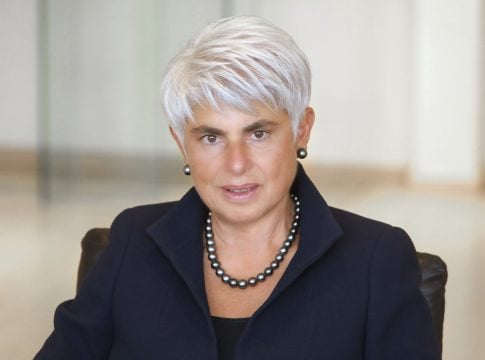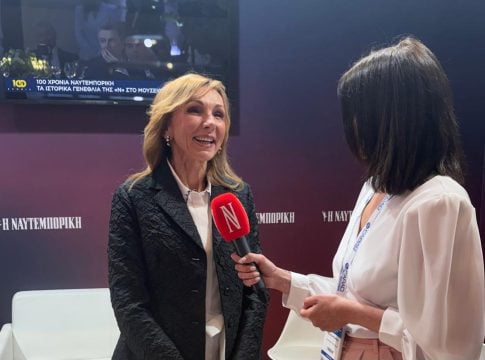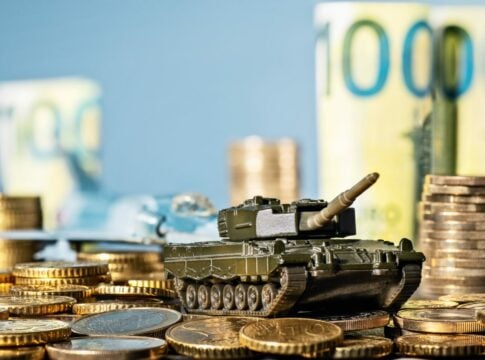

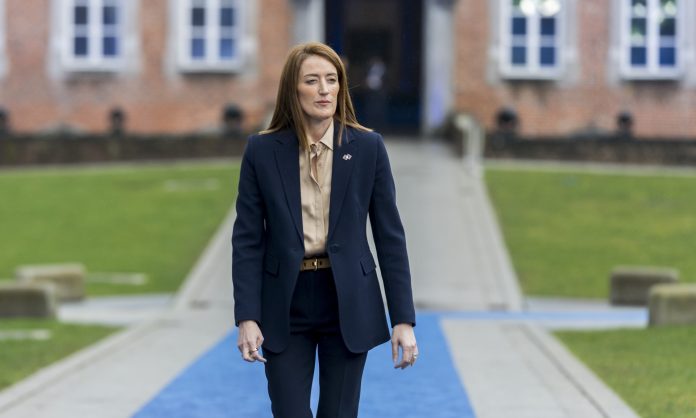
Defence and competitiveness are proposed as central elements of the European agenda in the near future, by the President of the European Parliament, Roberta Metsola, in an exclusive interview with Naftemporiki.
“Europe can become more autonomous and self confident” the President of the European Parliament said, admitting that “we still have a lot of work ahead of us.”
Given that in the latest Autumn Eurobarometer, Europeans are dominated by a feeling of insecurity, Roberta Metsola noted, speaking to “N”, that “Europe is working to protect itself and its citizens in an increasingly uncertain world”. Defense is now undoubtedly the EU’s priority and, as Metsola replied, “defence spending is rising across the Union and production is increasing”.
Regarding trade and competition, Metsola described the EU as an “Europe is an economic superpower and a major player on the global stage”. She particularly highlighted the recent agreement with India: “Our recent trade agreement with India shows the world what Europe can achieve, creating a trade zone of two billion people.”
Τhe full interview follows
European Union but for the entire world. As we have entered into 2026 with ongoing conflicts and tension even between allies, what are the Parliament’s priorities in these turbulent times?
We have just had an informal EU leaders meeting, where we discussed how Europe can become more autonomous and self-confident. We have our work cut out for us, that includes unlocking Europe’s unused capital and turn it into growth, finally completing our single market, and continuing to cut bureaucracy across sectors.
The overall objective must be a Union that stands on its own two feet. This is a transformative opportunity to build an autonomous Europe, capable of defending itself, protecting its citizens, and playing a leading role on the global stage. We must not lose focus or waver in our mission to make this ambition our reality.
European citizens. They do expect the European Union to protect them and act in
unity. How will the EU strengthen citizens’ sense of security?
There is a collective push in Europe to strengthen our defence capabilities and to take greater responsibility for our own security. It is true that we have lost time, but we are catching up fast – and moving faster than Europe has ever before.
Defence spending is rising across the Union and production is increasing. What Europe still needs to tackle is to produce faster, buy and spend smarter, and ensure that our defence industries can work together more effectively. In this regard, the European Parliament has already delivered concrete results. We have fast-tracked legislation that ramps up our arms production, strengthens our defence industries and helps to build defence cooperation across our continent.
At the same time, we are working to slash red tape across the defence sector and advancing military mobility designed to allow troops, equipment, and military assets to move more easily across our Union. This is how Europe will be able to protect itself and its citizens in an increasingly uncertain world.
National barriers are still holding our full potential back
lately with India and South America. How should the EU position itself in a world of
increased – and not always fair – economic competition and trade imbalances?
Europe is an economic superpower and a major player on the global stage. This is not about belief, it’s about numbers: seven of the world’s ten biggest exporting countries are in Europe, and we have a market of 450 million people with 26 million businesses. These numbers matter. It is why many countries are looking to negotiate trade agreements with us.
With this economic strength comes responsibility. Europe is an honest broker. This means trade must be fair, rules-based and mutually beneficial. It must strengthen our supply chains and create jobs and prosperity. Our recent trade agreement with India shows the world what Europe can achieve, creating a trade zone of two billion people. Just imagine the potential and the economic boost this will bring. It also gives us momentum to move forward on other trade deals, proving that trade relations can be a win-win that benefit all of us.
Strengthening the single market is an urgent strategic imperative for the EU. What specific measures are you planning in order to reduce regulatory barriers and create a truly investment-friendly framework?
At the beginning of this legislative term, a little over a year and a half ago, I said that the next five years must be marked by a true simplification agenda that can make a real difference for people: for our families, our businesses, and our farmers. The European Parliament is delivering for them. We are slashing bureaucracy and clearing a path for quicker progress across sectors, from defence and industry to investments and agriculture.
But reducing bureaucracy is just one side of the coin. We also need to move forward on completing our Single Market, especially in energy, telecommunications and financial services. National barriers are still holding our full potential back. To fix this, we urgently need less fragmentation across different countries and more harmonisation across national markets. This was a central issue in the European leaders meeting last Thursday, where I felt a real sense of urgency emerging. Many ideas are already on the table, such as the 28th regime, and we must now turn them into a concrete plan with clear timelines, so that the March European Council can take decisive action. Europe has a narrow window of opportunity. Just as we acted on health in the pandemic and on defence after Ukraine, now we must act on competitiveness.
[email protected]
Για να εμφανίζονται περισσότερα άρθρα της Ναυτεμπορικής στις αναζητήσεις σας εύκολα και γρήγορα, πρέπει να προσθέσετε το site στις προτιμώμενες πηγές σας. Μπορείτε να το κάνετε πηγαίνοντας εδώ.