
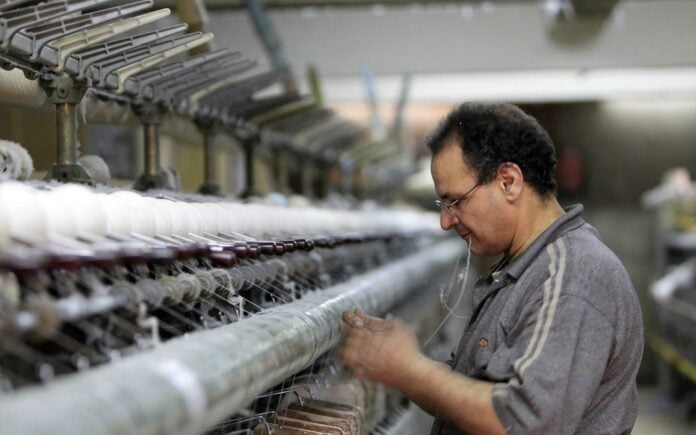
The Greek manufacturing sector remained positive in November, however, new orders and production declined.
The sector’s recovery weakened as reduced customer purchasing power led to a marginal increase in new sales. Nevertheless, companies increased their hiring and input purchases at a higher pace, partly due to efforts to build up inventories and supply chain disruptions that put pressure on production capacity.
Meanwhile, business confidence remained strong as companies forecast increased production next year. On the price front, the pace of growth in input costs and output charges slowed as companies marginally increased selling prices due to the difficult demand conditions.
In particular, the seasonally adjusted S&P Global Purchasing Managers’ Index® (PMI®) for the manufacturing sector in Greece fell at 52.7 in November, down slightly from 53.5 in October. The measure indicated a modest improvement in operating conditions. The increase has been recorded in the sector on a consistent, monthly basis for about three years.
New orders rise marginally
New orders rose for the thirteenth consecutive month in November, but the pace of growth slowed significantly from October and was broadly marginal. The increase was the weakest on record in this period, as companies noted that reduced customer purchasing power had negatively affected the upward trend.


Also, a further decline in new export orders received by Greek manufacturers in November limited the growth in overall sales.
Nevertheless, the continued increase in new orders led to a further increase in production levels in the middle of the fourth quarter. The pace of growth weakened, but was generally moderate and stronger than the survey average.
Stronger production demands were the reason for another monthly increase in employment. The pace of job creation increased at the fastest rate since May and was generally strong.
Selling prices rise at a weak pace
Greek goods producers recorded only a marginal increase in selling prices in November. Some companies reported discounts and promotional offers as the rate of increase in charges fell to the slowest on record in the current 27-month period of continuous price increases.
Supplier performance continued to decline sharply in November. According to company reports, delays in international input shipments and a sharp increase in purchasing activity were factors that led to the deterioration.
While inventory building efforts were successful with supplies stocks rising for a second consecutive month, finished goods stocks remained broadly unchanged in November.
Finally, production expectations among Greek goods producers remained upbeat in the middle of the fourth quarter. Although confidence levels declined compared to October, optimism levels were at historically high levels, supported by hopes of stronger demand conditions and investment to diversify the customer base.
Για να εμφανίζονται περισσότερα άρθρα της Ναυτεμπορικής στις αναζητήσεις σας εύκολα και γρήγορα, πρέπει να προσθέσετε το site στις προτιμώμενες πηγές σας. Μπορείτε να το κάνετε πηγαίνοντας εδώ.