
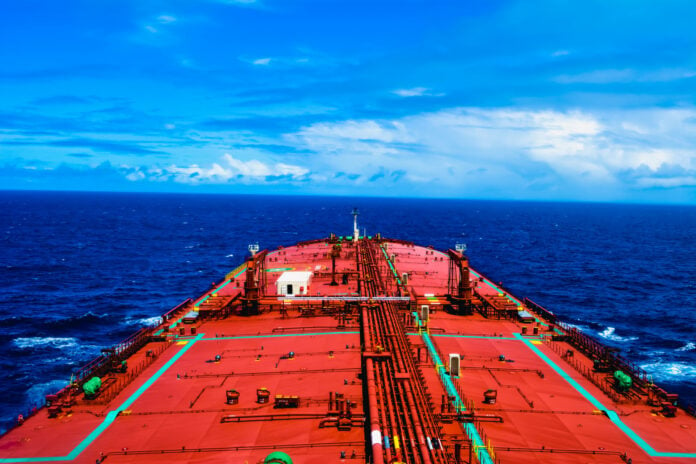
The strengthening of the MR and Aframax/LR2 fleet reveals the new balance of power in the oil transportation market.
With over 1.6% net growth in overall tanker capacity and historically low scrapping rates, product tankers are emerging as the most resilient and attractive “players” in the market.
According to data from Allied QuantumSea Research, at the end of the third quarter of 2025 the global tanker fleet numbered 6,103 ships, with a total capacity of 673.3 million DWT.
The bulk of the increase came from the MR and Aframax/LR2 class, which are almost entirely responsible for the net increase in oil product capacity.
The “protagonists”
In the first nine months of 2025, 80 MR and 47 Aframax/LR2 ships were delivered, while additions to the largest categories – just 4 VLCC and 22 Suezmax – were numerically much fewer.


The result is the continuous strengthening of the presence of product tankers in the overall fleet mix, which reflects the changing needs of the market: shorter distances and diversified flows of refined products.
At the same time, the total orderbook in tankers amounts to 944 ships. Of these, MR tankers are 487 ships (51.6% of the total) and Aframax/LR2 192 ships (20.3% of the total).
This means that these two categories together represent 679 ships, or approximately 72% of the total tanker orderbook – confirming that in 2025 market growth is clearly focused on product tankers and mid-sizes, which now form the core of the new generation fleet.
MR and Aframax remain the most active categories in the secondary market as well.
During the autumn, significant transactions were completed – such as the sale of four 2014-built eco MRs by Scorpio Tankers for $32 million each – confirming the continued strong demand for modern, efficient, low-emission ships.
It is recalled that, based on a recent survey by Xclusiv Shipbrokers, Greek shipowners have 285 ships under construction, i.e. 24% of the global orderbook – a percentage that makes them by far the market leaders.
In fact, interest is focused on Aframax/LR2, Suezmax and MR, which represent over 60% of Greek orders.
In 2026
More generally, analysts estimate that the path to 2026 will be determined by the interaction of geopolitical risks and regulatory developments.
New emissions standards (CII, EEXI), uncertainties about future fuels and the cost of retrofits are pushing shipowners to weigh the long-term value of their assets.
Product tankers are at the heart of the adjustment, with oil supply, refinery production, demand for oil derivatives and long-term oil product prices contributing to this dynamic.
Για να εμφανίζονται περισσότερα άρθρα της Ναυτεμπορικής στις αναζητήσεις σας εύκολα και γρήγορα, πρέπει να προσθέσετε το site στις προτιμώμενες πηγές σας. Μπορείτε να το κάνετε πηγαίνοντας εδώ.