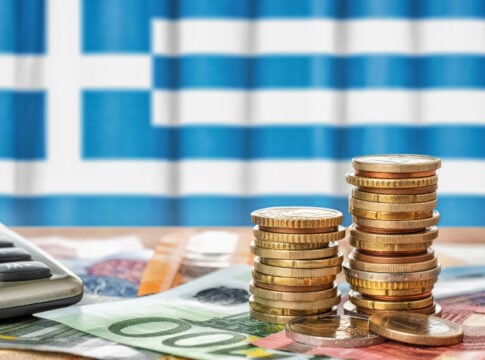


Sixty-three percent of Greek consumers say they plan to reduce their spending on food, while 37% intend to increase purchases of private-label products, which are reaching a “turning point” in the Greek market. At the same time, 36% of consumers are shifting towards healthier food choices.
These are among the key findings of a McKinsey & Company analysis on Greece, which highlights the main trends shaping the country’s supermarket sector, prevailing consumer behaviors and new growth opportunities for the industry.
The analysis draws on findings from McKinsey’s annual European study, “The State of Grocery Retail in Europe,” as well as data from the Greek market. Over the past five years, the sector has undergone more transformation than during the previous 25 years combined.
“Companies in the sector are being called upon to operate in an environment of intense competition, rising costs and low profit margins. Across Europe, most industry CEOs are focusing on technological modernization and the creation of new growth opportunities,” said Stefano Zerbi, Senior Partner at McKinsey & Company France and Leader of McKinsey’s Retail Commercial Practice in Europe.
Nine key trends
The study identifies nine major trends, with the Greek market diverging from the European average in several areas:


Pressure on profit margins: Despite relative stability in recent years, EBITDA margins for food retailers in Greece remain below the European average, at around 5% compared with approximately 6% in Europe. Margin pressure has emerged as one of the sector leaders’ main concerns.
Artificial intelligence adoption: The use of AI and advanced analytics is becoming increasingly important for retailers, from personalized customer communication to inventory management and operational optimization.
Market consolidation: The Greek market remains more fragmented than the European average. Small and independent stores continue to hold a significant market share of around 30%, compared with approximately 18% in the EU. This creates opportunities for new forms of cooperation aimed at strengthening competitiveness and achieving economies of scale.
Intensifying competition among supermarket chains: Consumer loyalty to supermarket chains is declining, with 65% of European consumers shopping at two or more chains every week. In Greece, only 15% of consumers shop exclusively at a single chain, while 73% visit two to three different chains.
Lower food spending: Sixty-three percent of Greek consumers plan to reduce food spending, compared with 50% across the EU. The main strategies include switching to cheaper products and actively seeking promotions, with discount retailers expected to gain further ground in the coming years.
Greater differentiation of shopping behavior by income: While European consumers show similar price sensitivity across income groups (around 48%), Greece displays a wider gap. Lower-income households place significantly greater emphasis on price (70%), while higher-income consumers focus more on quality and healthy eating choices (46% in Greece versus 35% in Europe).
Private-label products gaining momentum: Despite lower private-label penetration in Greece (around 24% compared with approximately 40% in Europe), consumers increasingly view these products as equal to branded alternatives in terms of quality and value. Thirty-seven percent say they plan to increase private-label purchases, while 91% believe they offer equal or better value for money.
Healthy eating gains importance: Greek consumers are turning more toward healthier food options than the European average (36% versus 31%), with the trend particularly strong among younger generations, especially Gen Z. Demand is focused mainly on fresh products and high-protein or low-calorie options, while organic and plant-based products remain niche categories.
Online grocery remains limited: Despite rapid growth in online food sales in recent years, online grocery penetration in Greece remains low at around 3%, well below other European markets such as France (around 6%) and the UK (around 10%). Growth in the online channel is mainly driven by Gen Z and Millennials, who are shaping broader consumer trends around convenience, health and quality.
Για να εμφανίζονται περισσότερα άρθρα της Ναυτεμπορικής στις αναζητήσεις σας εύκολα και γρήγορα, πρέπει να προσθέσετε το site στις προτιμώμενες πηγές σας. Μπορείτε να το κάνετε πηγαίνοντας εδώ.