
Helleniq Energy highlighted the group’s ability to successfully manage the crisis arising from the military conflict in the Middle East and the Persian Gulf.
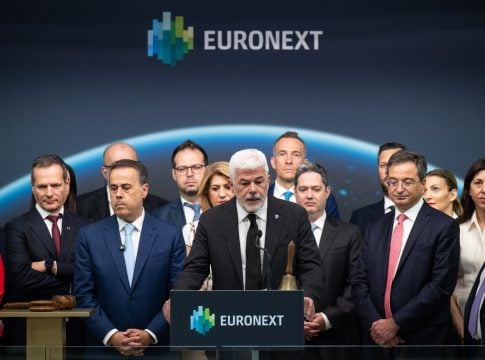
During the presentation of the group’s financial results to analysts, Andreas Shiamishis, Chief Executive Officer of Helleniq Energy, stated that the company succeeded in fully offsetting the “gap” created by disruptions in the Persian Gulf, with Helleniq Petroleum Trading — the group’s new hub for petroleum products trading — playing a decisive role in managing the impact of the crisis.
Resilience and International Reach
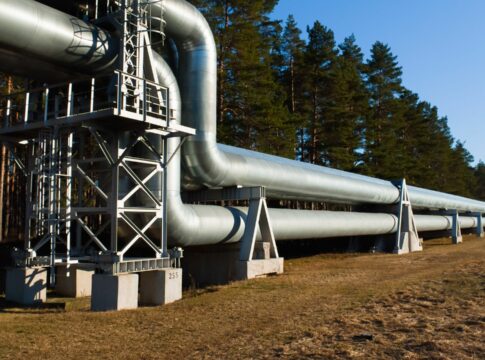
Fuel supply to markets both domestically and internationally continued uninterrupted, with exports increasing, while the reopening of the Thessaloniki–North Macedonia (Vardax) pipeline further strengthened the group’s international presence.
As highlighted during the presentation, the group faced no supply-related issues, with Greece remaining one of only three countries with a surplus production of refined petroleum products. Greece is notably surplus in gasoline, diesel, aviation fuel and kerosene, and is the largest exporter in Europe relative to the size of its domestic market.


The group’s refineries, with a combined annual production capacity of 16 million tons, supply approximately 60% of the Greek market, while a significant portion of production is exported, primarily to the Mediterranean and Black Sea regions.
Overall, the strong performance of the refining segment, supported by healthy refining margins, combined with the performance of the trading business and the integration of Enerwave, led to positive financial results, with comparable EBITDA reaching 293 million euros in the first quarter of 2026 and comparable net profits amounting to 140 million euros.
Fuel Market Performance
Sales in the domestic fuel market declined slightly year-on-year by 2%, while the opposite trend was recorded in aviation fuels, where sales rose by approximately 10% in the first quarter compared with the same period last year.
Marine fuel sales maintained their previous trajectory, recording a modest decline of around 4%.
In any case, higher oil and natural gas prices strengthened the group’s core financial metrics, both in refining and in electricity generation.
The contribution of Enerwave was also assessed positively, with the new vertically integrated electricity and natural gas platform contributing 38 million euros in Comparable EBITDA during the first quarter of 2026.
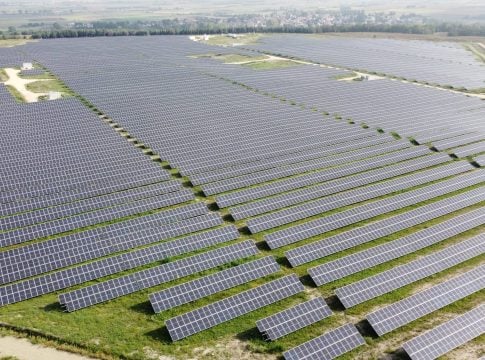
A similar strategic approach is being adopted in renewable energy sources (RES), with the group targeting 1.5 GW of installed capacity within three years. Over the next 18 months, installed capacity is expected to exceed 1 GW, compared with 564 MW currently in operation.
This portfolio will be spread across five countries while maintaining technological balance, including wind and solar projects as well as energy storage systems.
Responding to a related question, George Alexopoulos, Deputy Chief Executive Officer of Helleniq Energy, noted among other things that energy storage occupies a central role in the group’s plans, although market risks that could place pressure on related revenues are also being carefully considered.
Investments and Financial Position
Total investments in the first quarter of 2026 increased to 186 million euros, primarily directed toward general maintenance and upgrade projects at the Aspropyrgos Refinery, as well as the implementation of renewable energy capacity expansion projects.
Net debt stood at 2.7 billion, mainly due to temporarily elevated working capital requirements associated with the shutdown at the Aspropyrgos refinery, which resumed operations in April, including more than 0.4 billion in project finance borrowing for renewable energy projects.
Indicative of the group’s financial strength is the 8% reduction in total debt servicing costs, as well as the significant availability of credit lines exceeding 1 billion euros.
Για να εμφανίζονται περισσότερα άρθρα της Ναυτεμπορικής στις αναζητήσεις σας εύκολα και γρήγορα, πρέπει να προσθέσετε το site στις προτιμώμενες πηγές σας. Μπορείτε να το κάνετε πηγαίνοντας εδώ.