
Lancom is expanding into the defense sector, marking a strategic move for the purely Greek company active in data centres, cloud services and telecommunications.
As Nikos Zachariadis, COO & Partner Executive Lead for European Affairs, Defence & Strategic Programs, told Naftemporiki, “Lancom’s expansion into defense involves leveraging the expertise we have already developed in critical digital infrastructure within an environment that demands significantly higher levels of security, resilience and availability.
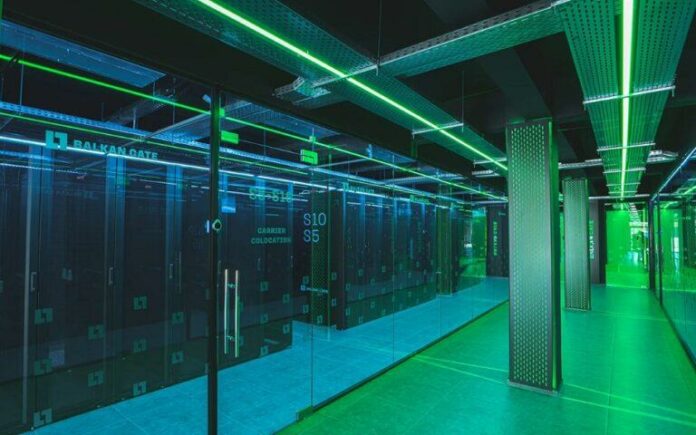
Lancom already has a strong foundation in data centres, telecommunications infrastructure, cloud and cybersecurity. This is therefore not an unfamiliar or opportunistic shift, but rather a natural evolution of our capabilities towards projects that require operational reliability and stringent specifications. In essence, we are referring to infrastructure, connectivity, cyber resilience and services capable of supporting critical defense and broader national missions. The company has the capacity to support such projects, as it operates three data centres, an owned optical network and cybersecurity services.”
Through this move, Lancom aims to position itself as a reliable Greek technology partner in a field that extends beyond “hard” defence systems to include their digital backbone. “This is where we aim to be present: in projects of substance, with a European orientation, long-term value and a clear technological footprint,” Zachariadis noted.
Trend
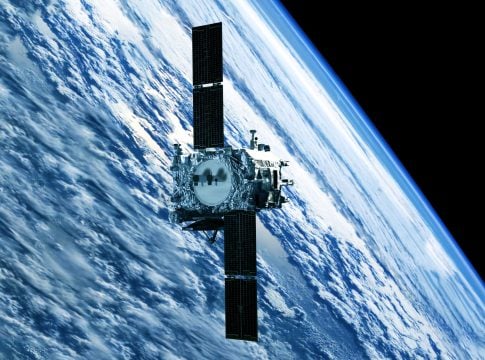
A key trend is that defence is becoming increasingly digital, interconnected and multi-domain. Critical areas now include cybersecurity, multi-domain operations, the use of AI for situational awareness, drones, secure communications, the protection of critical and subsea infrastructure, cloud-based operational management, as well as space and secure navigation technologies.


This is clearly reflected in the European Defence Fund 2026 programme, which allocates resources to areas such as quantum-secured networks, electronic warfare, multi-domain operations cloud, AI, small robotics and drones, and the protection of critical subsea infrastructure. In simple terms, modern defence is no longer limited to platforms and weapon systems; it also encompasses software, networks, data, resilience and speed of decision-making.
It is noted that Lancom executives participated in the EDF Info Days held in Brussels on 10–11 March 2026.
Asked whether Lancom intends to take part in these initiatives, Zachariadis stated: “Yes, we are actively interested in exploring participation in initiatives that align with the company’s technological core and our real capabilities. However, participation in such programs is not a matter of impressions, but of thorough preparation, the right partnerships and clearly defined added value. Our approach is to position ourselves in a structured and selective manner in areas where Lancom can play a substantive role. The EDF 2026 program is open to eligible public and private entities from EU Member States and Ukraine, with its core objective being to support collaborative research and development schemes.”
Για να εμφανίζονται περισσότερα άρθρα της Ναυτεμπορικής στις αναζητήσεις σας εύκολα και γρήγορα, πρέπει να προσθέσετε το site στις προτιμώμενες πηγές σας. Μπορείτε να το κάνετε πηγαίνοντας εδώ.