
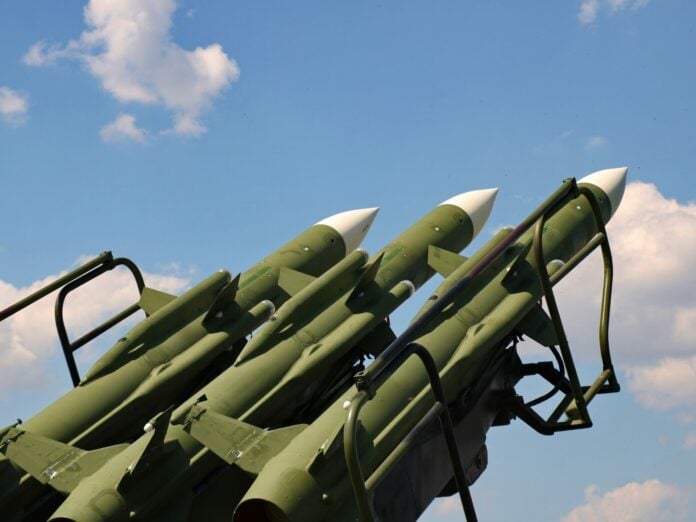
The time is counting down for the submission of proposals by member states of the European Union for participation in the SAFE (Security Action for Europe) financial instrument.
Specifically, on November 30, the participating states will submit plans based on which they will use the EU’s low-interest loans for Defense.
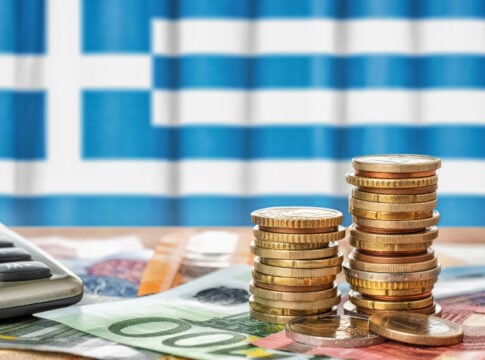
Greece, through SAFE, is expected to strengthen the existing planning within the framework of the Long-Term Defense Armaments Program (LTAP), which reaches 28.8 billion euros in combination with the approximately 790 million euros (787.67 million euros specifically) that it will raise through loans.
It is recalled that for a subsidy through SAFE, contracts must ensure that at least 65% of the cost (or at least a large part) will come from EU companies.
What is Athens considering?
According to information from “N”, among other proposals, Athens is interested in artillery ammunition, a satellite for military telecommunications, night vision binoculars, unmanned vehicles and (possibly) systems that will be included in the “Achilles Shield”.


Collaborations
SAFE will also allow EU member states to participate in joint procurements.
Athens is considering the possibility of cooperation with Cyprus – for now, as it is not ruled out that it will receive an “invitation” from another EU member state – in programs concerning drone and anti-drone systems.
Moreover, during his recent trip to Nicosia, Minister of National Defense Nikos Dendias discussed with his counterpart Vassilis Palmas the prospect of cooperation between the two countries within the framework of the SAFE program.
This participation, as he stated, concerns the development of joint projects that will be funded by the EU in areas such as research, innovation and technological development in the field of defense.
Ankara’s persistence and Athens’ condition
While time counts down, it remains unknown whether third countries for which there are terms and conditions will participate.
The reason for the United Kingdom, Canada, South Korea and Turkey. Especially for Turkey the path to SAFE is not at all easy.
The European Commission has reduced its -initial- demand of 6.7 billion euros for the United Kingdom’s participation in the rearmament program by more than two-thirds, amid growing internal divisions in the EU regarding the terms of Britain’s participation.
Diplomatic sources cited by the Financial Times reported that the European Commission has now set a “price” of 2 billion euros, out of the almost 7 billion that had been set, for the UK’s participation in the program.
In any case, the reduced amount remains much higher than the 75 million euros that the UK has offered to participate in the program, with pressure from both sides increasing to reach an agreement before the November 30 deadline.
At the same time, the British Defense Secretary, John Healey, said a few days ago that the UK “is ready to participate in the program, but is not prepared to do so at any cost.”
Things remain extremely difficult for Ankara’s participation despite its tireless efforts.
Initially, the Greek government made it clear that it will not consent to Turkey’s inclusion in the EU’s SAFE regulation loan program, setting as a condition the lifting of the “casus belli.”
Secondly, Turkey has not concluded a bilateral agreement with the EU, something that requires unanimity from the member states.
Third, it illegally occupies an EU member state (Cyprus).
Fourth, France is also aligned with the positions of Greece and Cyprus.
Fifth, the Commission assured that Brussels is taking into account the concerns of the European Union member states regarding the possibility of Turkey’s participation in the new financial “tool”.
Nevertheless, it is a fact that Ankara participates in European programs through agreements it has concluded with European states anyway, while at the same time, competent sources told “N” that “it is not ruled out that we will see Turkey participating 100%”.
Next steps
After the deadline, the European Commission will examine the applications submitted by the Member States. That is
-whether they meet the criteria
-whether the amounts requested are justified
-whether the projects or needs declared are compatible with the purpose of SAFE
-based on the assessment, the Commission will decide which Member States will receive funding and at what level, i.e. there may be an adjustment of the amount.
The European Commission and the approved Member States will then sign the formal agreements on:
-the amount of the loan
-the financing conditions
-the disbursement schedules
Finally, after the signature, the funds will start to be disbursed.
Για να εμφανίζονται περισσότερα άρθρα της Ναυτεμπορικής στις αναζητήσεις σας εύκολα και γρήγορα, πρέπει να προσθέσετε το site στις προτιμώμενες πηγές σας. Μπορείτε να το κάνετε πηγαίνοντας εδώ.