
In a period when the Greek economy is decisively moving beyond the crisis years and returning to the forefront of international investor interest, the transformation of the Athens Stock Exchange into Euronext Athens takes on particular significance — not merely as a business transaction, but as a strategic repositioning of the country on Europe’s financial map.
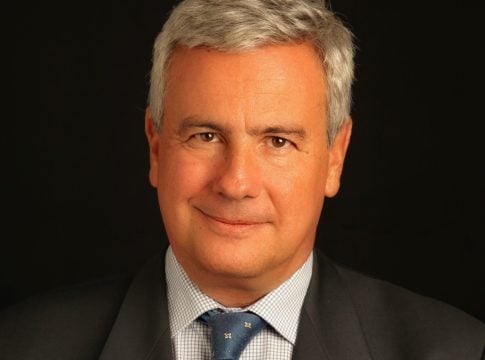
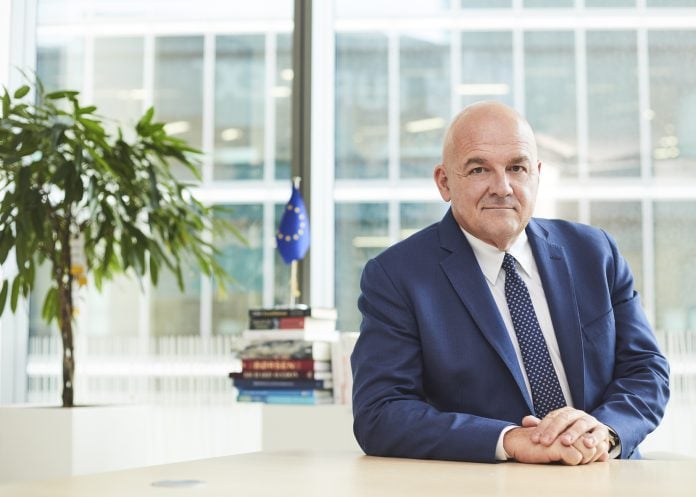
As Stéphane Boujnah, Chief Executive Officer of Euronext, tells Naftemporiki, Athens “will not simply join the network; it will help shape it,” with the ambition of becoming one of the group’s key pillars in the years ahead. What does this integration bring? Direct access for Greek companies to Europe’s largest pool of liquidity, enhanced international visibility and, potentially, a new wave of “corporate homecoming” for Greek firms that sought capital abroad.
“We are not investing in Greece for what it has been; we are investing for what it will become,” Mr Boujnah stresses, speaking to Naftemporiki on the occasion of the 11th Delphi Economic Forum, which opens today and runs until April 25.
Within this context, the head of Euronext highlights Athens’ role as a hub for technology, energy markets and the financing of both the public and private sectors, at a time when Europe is called upon to meet the challenge of deeper integration and greater strategic autonomy.
The full interview follows:
Euronext’s acquisition of the Athens Stock Exchange marks a significant milestone for both Greece and your group. What strategic role do you envision for Athens within the broader Euronext ecosystem over the next five years?


This integration is much more than an acquisition: it is a long-term commitment to Greece and to the role that Athens can play in Europe’s economic future. At a moment when the Greek economy is performing strongly, we want to give Greek companies direct access to the largest European liquidity pool, international investors, increased growth opportunities for listed Greek companies and a more attractive market for companies that choose to list.
Over the next five years, I see Athens becoming one of the strategic pillars of Euronext. It will not simply join our network; it will help shape it. Athens has the potential to become Euronext’s gateway to Southeastern Europe and a hub for technology, energy markets, sovereign debt and the financing of Greek and regional companies.
We are already acting on this vision. We are establishing a new Group-level support and technology centre in Athens, which will support Euronext’s business lines across Europe and create highly skilled jobs in Greece. We also intend to strengthen cooperation between Nord Pool and the Greek power market operator EnEx and to facilitate the trading of the Greek sovereign debt on MTS to improve its liquidity.
The rebranding to “Euronext Athens” reflects this ambition: preserving a strong Greek identity while connecting Athens to a pan-European marketplace.
Greece has recently regained investment-grade status and is seeing renewed investor interest. How do you assess the timing of this move, and what does Greece bring to Euronext in terms of growth potential?
The timing is exactly right. Greece is no longer defined by the crisis of the past decade; it is increasingly recognised as one of Europe’s strongest recovery stories. Regaining investment-grade status is international recognition of the discipline, resilience and ambition that Greece has demonstrated over many years.
Today, Greece combines stronger macroeconomic fundamentals, political stability and growing investor confidence. For Euronext, we see the potential to help accelerate this growth momentum. We see a country with talented people, dynamic companies and significant potential for new listings, particularly among small and medium-sized enterprises and family-owned businesses.
We are not investing in Greece because of what it has been; we are investing because of what it will be.
#Euronext is delighted to announce the rebranding of @ATHEX_Group to Euronext Athens and unveils its new corporate identity, marking a key step in the integration of the Greek capital market into Euronext. Learn more: https://t.co/NL2uyz8WVI pic.twitter.com/U1O4xJkNsJ
— Euronext (@euronext) April 20, 2026
One of the long-standing challenges of the Greek market has been liquidity and limited depth. How will integration into the Euronext platform improve market liquidity, visibility, and access to international capital for Greek-listed companies?
For too long, the Greek market has suffered from a paradox: Greece has many strong companies, but too few have had access to the scale of capital and visibility they deserve. As a result, some of the country’s most successful businesses have looked abroad to finance their growth.
The integration of Athens into Euronext changes this fundamentally. Greek companies will gain access to the largest liquidity pool in Europe, supported by a market infrastructure that today handles twice the trading volumes of the London Stock Exchange and three times those of Frankfurt.
Companies listed on Euronext Athens will progressively benefit from our common technology and the broadest investor base in Europe. They will become visible to the same international investors that already invest across Amsterdam, Brussels, Dublin, Lisbon, Milan, Oslo and Paris. This is particularly important for medium-sized Greek companies, which often have strong fundamentals but insufficient international visibility.
This will encourage more Greek companies to remain listed in Greece, more companies to consider a dual listing, and perhaps even some form of ”corporate nostos”. More broadly, this integration is fully aligned with Europe’s drive towards greater strategic autonomy and a genuine Single Investment Union.
Euronext has positioned itself as a key pillar in advancing the European Capital Markets Union. How does the inclusion of Athens strengthen your vision for a more integrated and competitive European capital market?
The inclusion of Athens is important not only for Greece, but for Europe. It demonstrates that European market integration is not an abstract political ambition but a practical reality.
Europe remains too fragmented. Too many exchanges, clearing houses and market infrastructures. This weakens liquidity, increases costs and makes it harder for European companies to compete globally.
Euronext was created to address exactly this challenge. The integration of Athens is another concrete step towards a genuine European capital market.
In a world of geopolitical fragmentation and increasing competition among global financial centres, how do you see Euronext differentiating itself — and what role can Southeast Europe, starting with Greece, play in that strategy?
In a world that is becoming more fragmented, Europe cannot afford to remain divided. The financial powers of the future will be those with the scale, technology and strategic autonomy to compete globally. That is precisely where Euronext differentiates itself.
Over the past 25 years, we have built Europe’s leading capital markets infrastructure: the largest pool of liquidity in Europe, an integrated clearing house and a technology platform serving markets across the continent. We have shown that European consolidation is possible.
The integration of Athens gives us a strong platform for the next stage of our development. Greece is uniquely positioned at the crossroads of Europe, the Balkans and the Eastern Mediterranean. From Athens, Euronext can become a natural gateway to Southeastern Europe.
Euronext has been investing heavily in digital infrastructure and advanced market technologies. How do you see artificial intelligence transforming trading, risk management, and market surveillance?
Artificial intelligence will profoundly transform financial markets. It will make exchanges more efficient, particularly in market surveillance, cyber-security, and risk management.
More broadly, Europe must ensure that the next generation of AI in finance is built on European technology and according to European standards, interests and values. Strategic autonomy in capital markets also requires technological autonomy. And this again is a good reason to join forces across Europe. It is better to succeed together than to fail separately.
Για να εμφανίζονται περισσότερα άρθρα της Ναυτεμπορικής στις αναζητήσεις σας εύκολα και γρήγορα, πρέπει να προσθέσετε το site στις προτιμώμενες πηγές σας. Μπορείτε να το κάνετε πηγαίνοντας εδώ.